
Importing stone feels risky. You worry about broken slabs and wasted money. Do not panic, avoiding errors is simple.
To avoid mistakes when importing marble countertops, always verify packaging standards1, demand detailed quality control reports, and approve physical samples before production. Clear communication about edge profiles2 and dimensions is vital. Working with an experienced manufacturer ensures your goods arrive safe and exactly as specified.
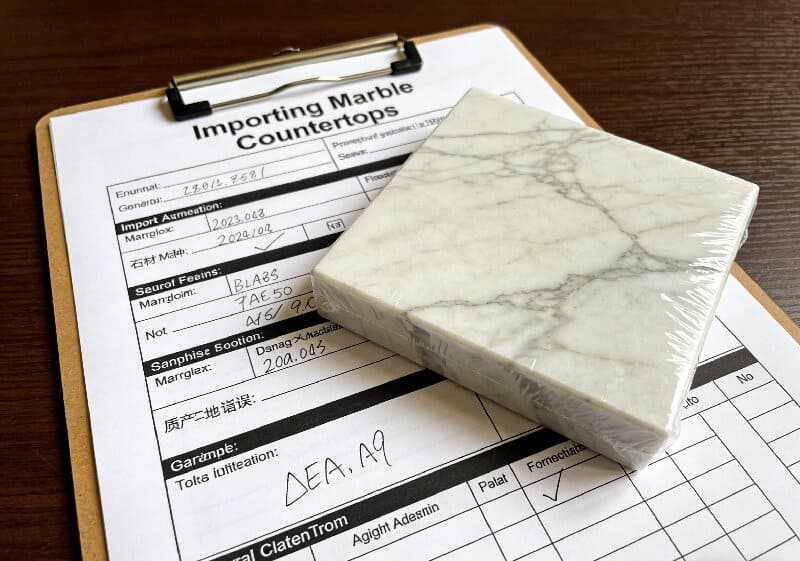
Many buyers rush the process. They focus only on price. Then, problems happen. I want to share a story. A US client ordered in a hurry. They forgot to check packaging. The stone arrived broken. We fixed it, but it was stressful. Now, I will show you how to avoid this.
Do You Ignore Packaging Standards When Shipping?
Shipping stone is dangerous. Weak boxes mean cracked corners. You cannot afford broken goods.
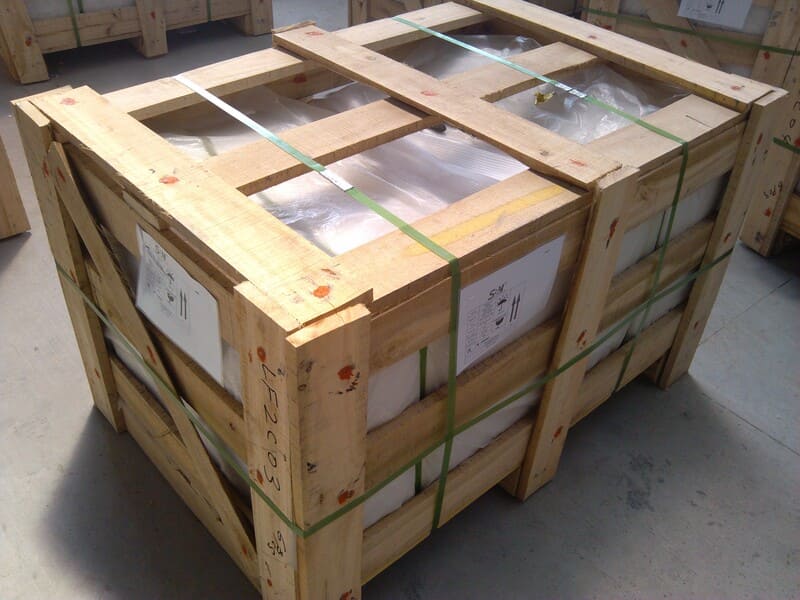
Never assume the factory knows your shipping needs. Always specify fumigated wooden crates3, shock-absorbing foam4, and corner protection5. Strong packaging prevents damage during long ocean freight and local trucking.
I learned a hard lesson a few years ago. I received an order from a client in the United States. It was their first time importing marble countertops from overseas. They were in a huge rush. They needed to meet a tight construction schedule. Because of the time pressure, they ignored a key step. They did not confirm if the export packaging met international transport standards.
The goods arrived at their port. The result was bad. Some countertops had broken corners. The packaging was not strong enough for the long trip. The client was very anxious. The project was already in the installation phase. I wanted to help them solve this problem immediately. I arranged for urgent replacements.
I also explained our factory's standard packaging process to them. We use reinforced wooden crates. We put shock-absorbing foam4 between the stones. We also use moisture-proof treatments6. After this experience, the client understood something important. You cannot just look at product quality. You must look at the "details" like packaging. Now, they check packaging requirements every time they order. Our cooperation is much smoother.
You need to know specific packaging terms. This helps you speak to your supplier.
| Packaging Component | Why It Is Important | What to Ask For |
|---|---|---|
| Wooden Crates | Holds the weight of the stone. | Ask for "Fumigated seaworthy wooden crates." |
| Foam Sheets | Stops stones from scratching each other. | Ensure foam is placed between every polished face. |
| Plastic Straps | Keeps the crate closed tight. | Ask for heavy-duty exterior strapping7. |
| Corner Protection | Protects the weakest part of the stone. | Request hard plastic or foam corners. |
Do not leave this to chance. Ask for photos of the crates before they close the container. This simple step saves you thousands of dollars in broken stone.
Are You Skipping the Pre-Shipment Inspection?
You trust the factory. But mistakes happen during cutting. You find errors too late.
Always ask for photos and videos before the container leaves the factory. Check the dimensions, flatness, and color consistency8. A strict inspection process fixes issues while the stone is still in China.
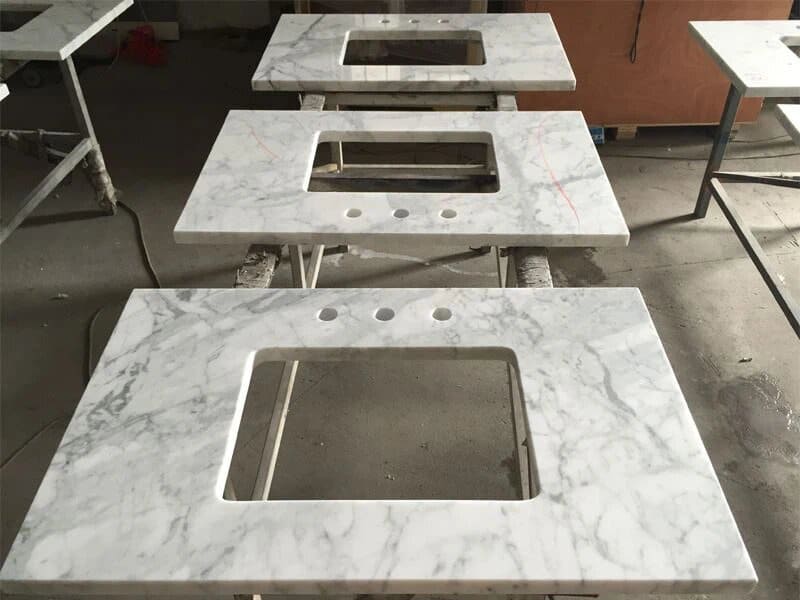
Quality control is your safety net. Many importers think they can check the goods when they arrive. This is a big mistake. If you find a crack or a wrong size in your warehouse, it is too late. Returning stone to China is impossible. It costs too much money. You must catch the errors while the stone is still at the factory in China.
I always tell my clients to do a "Dry Lay" inspection. This means we lay out the kitchen countertops on the factory floor. We put them together exactly like they will be in the client's house. We check if the veins match at the seams. We check if the color flows naturally from one piece to the next.
Natural stone has variations. This is normal. But you do not want a dark piece next to a light piece.
Here is a checklist you should use for every order:
- Dimension Check: Measure the length, width, and thickness. Is it within tolerance (+/- 1mm)?
- Sink Cutout Check: Take the actual sink template. Does it fit the hole perfectly?
- Edge Profile: Is the bullnose or eased edge smooth? Are there polishing marks?
- Surface Quality: Look for scratches, cracks, or black spots that are not part of the natural pattern.
The Importance of Color Consistency
Marble is a natural product. It is not like plastic. Block A might look different from Block B.
- Request Block Photos: Ask to see the raw block before cutting.
- Request Layout Photos: Ask for a photo of the whole kitchen laid out.
- Labeling: Ask the factory to number the pieces. Piece 1 connects to Piece 2.
If you skip inspection, you are gambling. Do not gamble with your business. Ask for a detailed QC report. It should show photos of the tape measure on the stone. It proves the size is correct. This builds trust between you and us.
Do You Rely Only on Digital Photos for Selection?
Photos look great on a screen. Real stone looks different. You might hate the real color.
Photos change colors depending on lighting. Always request physical samples to see the true texture and veining. This ensures the final product matches your design vision and prevents disappointment.
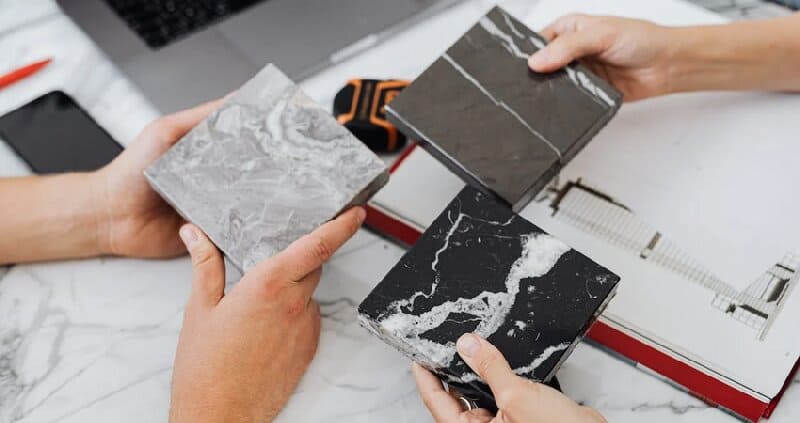
We live in a digital world. It is easy to look at a picture on a phone and say "I want that." But stone is tricky. A camera lens changes the look of marble. The lighting in our factory is different from the lighting in a showroom. The lighting in a showroom is different from the lighting in a client's kitchen.
I had a client who chose a grey granite based on a photo. In the photo, it looked like a cool, blue-grey. When the container arrived, the stone had green tones. The client was unhappy. The stone was correct, but the photo was misleading. The camera did not capture the green specks.
To fix this, you must use a physical sample process.
How to Handle Samples Effectively
Sending a small piece of stone costs money. DHL or FedEx fees are high. But it is cheaper than a rejected container.
- Ask for Small Samples: Request a 10x10cm or 15x15cm piece. This shows the base color.
- Understand the Limitation: A small sample does not show big veins. It only shows the grain and background color.
- Video Call: If you cannot wait for a sample, do a live video call. Ask the factory to walk around the slab. Ask them to put the stone in sunlight and in shadow.
Understanding Natural Variation
You need to educate your customers too. If you are a wholesaler or contractor, your customer expects the stone to look like the sample.
| Stone Type | Variation Level | What to Expect |
|---|---|---|
| Pure White Marble | Low | Very consistent, looks like the sample. |
| Carrara Marble | Medium | Veining amount changes. Background is usually consistent. |
| Exotic Granite | High | The sample might look totally different from the slab. |
I always send a "Range Sample" for exotic stones. I send one piece that is light and one piece that is dark. This shows the client the full range. It manages expectations. Do not rely on a single JPEG image. Touch the stone. See the polish. This ensures you get exactly what you want.
Are Your Technical Drawings Clear Enough for Production?
You send a rough sketch. The factory guesses the details. The final product fits poorly.
Factories need precise CAD drawings. Mark every edge profile, sink hole size, and faucet placement clearly. Ambiguity leads to production errors that are impossible to fix after shipping.
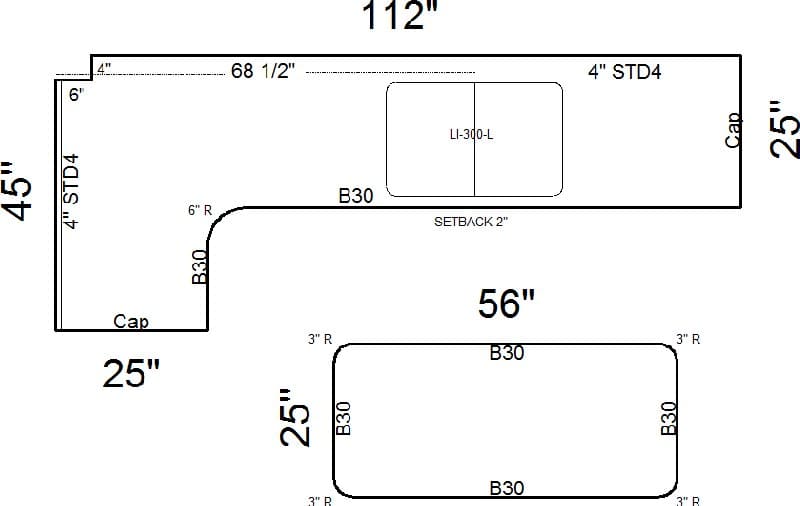
Communication is the bridge between your idea and the finished product. In the stone industry, drawings are our language. Sometimes, clients send a hand-drawn sketch on a napkin. They scan it and email it. They say, "Make this." This is dangerous.
A factory in China might not know American or European standards by heart. We follow your instructions. If the instructions are vague, we have to guess. Guessing leads to mistakes.
For example, "Standard Sink Cutout" means nothing. Is it a double sink? Is it an under-mount or drop-in? What is the radius of the corners? If we cut the hole too big, the stone is ruined. If we cut it too small, you have to cut it on the job site. That creates dust and costs labor.
The Essential Elements of a Good Drawing
You do not need to be an architect. But your drawings must be clear. We use CAD (Computer-Aided Design) for everything.
- Units of Measurement: Be clear. Do you use Millimeters or Inches? In China, we use Millimeters. If you send Inches, we convert them. Check the conversion.
- Edge Profiles: Mark which edges need polishing. Not all edges are visible. Polishing a back edge wastes money. Mark "Polished" or "Sawn Cut" clearly.
- Faucet Holes: How many holes? What is the diameter? Where is the center point?
- Backsplashes: Do you need them? How high are they? Are they polished on the top edge?
The Approval Process
This is how we work at Lifeng Stone to avoid mistakes:
- Shop Drawings: You send us your plans. We create a "Shop Drawing." This is a clean, digital version of your plan.
- Review: You check our drawing. You verify every number.
- Signature: You sign the drawing.
- Production: We only start cutting after we see your signature.
This process takes a few extra days. But it saves weeks of headache. It forces everyone to look at the details. It ensures that the countertop fits the cabinet perfectly. Do not rush the paperwork. The drawing is the contract. If the drawing is right, the stone will be right.
Conclusion
Importing marble is profitable when you watch the details. Check packaging, inspect quality, and communicate clearly for success.
Understanding packaging standards is crucial to prevent damage during transport, ensuring your investment arrives safely. ↩
Knowing edge profiles helps ensure the final product matches your design vision and fits perfectly. ↩
Fumigated crates meet international shipping standards, preventing delays and ensuring safe transport of your goods. ↩
Shock-absorbing foam prevents movement and damage, safeguarding your investment during transit. ↩
Corner protection is crucial for preventing damage to the most vulnerable parts of the stone during shipping. ↩
Moisture-proof treatments protect your stone from damage during transport, ensuring it arrives in perfect condition. ↩
Heavy-duty strapping keeps crates secure during transport, reducing the risk of damage to your marble countertops. ↩
Ensuring color consistency is essential for aesthetic appeal and maintaining design integrity in your project. ↩