Importing marble feels risky when you cannot see the stone with your own eyes. You worry about cracks, poor finishes, or materials that break easily. Understanding international standards fixes this fear immediately.
International quality standards1 for marble, like ASTM2 and EN3, measure hardness, water absorption4, and abrasion resistance5. These benchmarks ensure the stone is durable, safe for food contact, and suitable for commercial or residential use, guaranteeing you get high-quality products from your supplier.

A few years ago, I received an inquiry from a client in Italy. They were looking for marble table tops for a high-end restaurant. However, they had very strict requirements regarding quality. During our first talk, the client said again and again, "We do not just want beautiful stone. We need it to meet European standards for wear resistance and food safety6."
To stop their worry, I prepared a detailed test report. This report covered EN3 (European Standards) and ASTM2 (American Society for Testing and Materials) parameters. I also included our factory's third-party certifications. The client saw the report but was still a little unsure. So, I invited them to a video meeting. I showed them our cutting, polishing, and testing processes live.
In the video, they watched us use professional equipment to test water absorption4 and acid resistance. The client laughed and said, "This reminds me of being in a laboratory." At that moment, the distance between us disappeared. Our relationship became more like friends trusting each other. Finally, they placed the first order. They continued to choose our stone for later projects too. This experience showed me that standards are not just numbers. They are the bridge of trust.
What Are the Key Differences Between ASTM2 and EN3 Standards?
You see acronyms like ASTM2 and EN3 on data sheets often, but it is confusing to know which one matters. You need to know which standard applies to your specific region.
ASTM2 (American Society for Testing and Materials) is mostly used in North America, while EN3 (European Standards) is used in Europe. Both test similar things like density and strength, but they use different testing methods and scoring units.
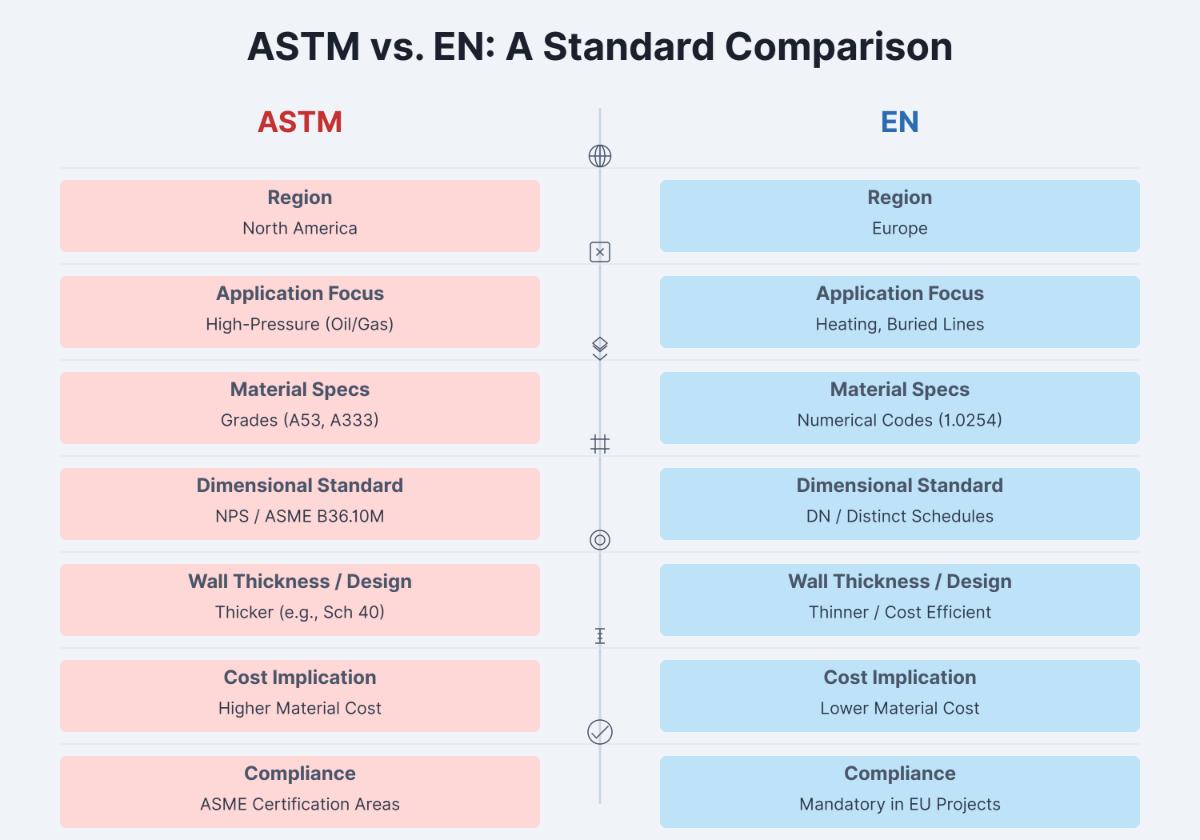
When you look at a technical data sheet for our marble, you will see two main columns. One is for ASTM2 and one is for EN3. It is important to understand that these are not just random numbers. They tell you how the stone will behave in your house or building.
Understanding the Focus of Each Standard
ASTM2 standards focus heavily on the physical properties relevant to construction in the United States. For example, ASTM2 C97 measures absorption and bulk specific gravity. If you are a contractor in the US, your building code will require this specific test. On the other hand, EN3 standards, like EN3 13755, are required for projects in the European Union. My Italian client specifically needed the EN3 data because their local laws demanded it for commercial spaces like restaurants.
Critical Thinking: Which One is Better?
Neither is "better" than the other. They are just different languages for the same quality. A stone that passes ASTM2 standards for high strength will usually pass EN3 standards too. The difference lies in the testing method. For example, the way we dry the stone before weighing it might differ slightly in temperature or time between the two standards. As a buyer, you should ask for the standard that matches your local building codes.
| Feature | ASTM2 Standards | EN3 Standards |
|---|---|---|
| Region | USA / North America | Europe / Global |
| Water Absorption | ASTM2 C97 | EN3 13755 |
| Compressive Strength | ASTM2 C170 | EN3 1926 |
| Flexural Strength | ASTM2 C880 | EN3 12372 |
Why Is Water Absorption Testing Critical for Kitchen Countertops?
Stains are the biggest nightmare for any kitchen owner or chef who uses natural stone. A beautiful white marble counter can be ruined by wine or oil if the stone is too porous.
Water absorption testing measures how much liquid a stone soaks up. For kitchen use, marble must have a low absorption rate (usually under 0.2%). This prevents deep stains and bacterial growth, keeping the surface hygienic and easy to clean.
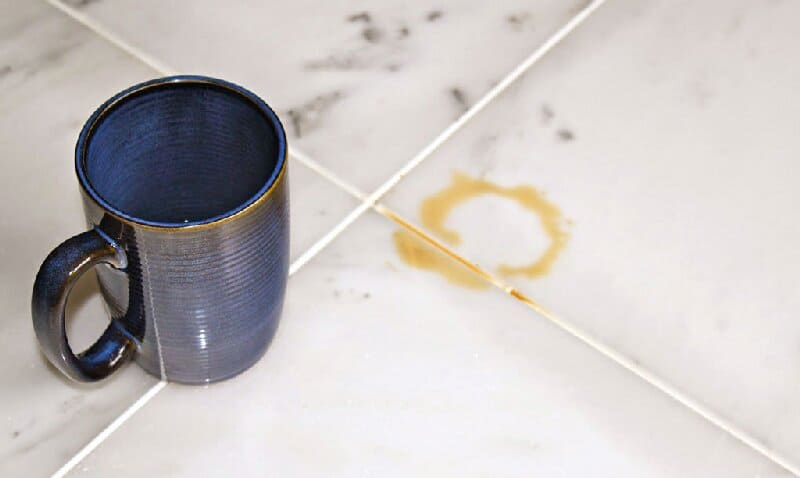
Water absorption is perhaps the most critical test we do at Lifeng Stone. This is especially true for the kitchen countertops and vanity tops we export. If a stone drinks up water, it will also drink up red wine, coffee, and oil.
The Testing Process Explained
In our factory in China, we take this seriously. We cut a sample of the stone and weigh it when it is completely dry. Then, we soak it in water for a specific time, usually 24 to 48 hours. After soaking, we weigh it again. The difference in weight tells us how much water got inside. If the number is high, the stone is porous. Porous stone is bad for kitchens because bacteria can grow inside the tiny holes.
Real-World Application
For my Italian client, food safety6 was the main concern. A restaurant table must be clean. We showed them that our marble had an absorption rate lower than the industry limit. This meant they could spill sauce on the table without panic. We also apply a sealer to our products, but the stone itself must be good quality first. High density means low absorption. This leads to a longer life for the product.
Why Low Absorption Matters
- Hygiene: Less water means less room for mold and bacteria.
- Aesthetics: High absorption stones change color when wet and may not change back.
- Durability: Water inside stone can freeze and crack the stone in cold weather (for outdoor use).
How Do We Measure Abrasion Resistance and Hardness?
High-traffic areas like hotels and lobbies wear down stone floors very quickly. You do not want your expensive marble to look dull or scratched after just one year of use.
Abrasion resistance tests determine how well the marble resists scratching and foot traffic. We use the Mohs scale for hardness and specific friction tests. High scores mean the stone stays shiny and smooth even in busy commercial environments.
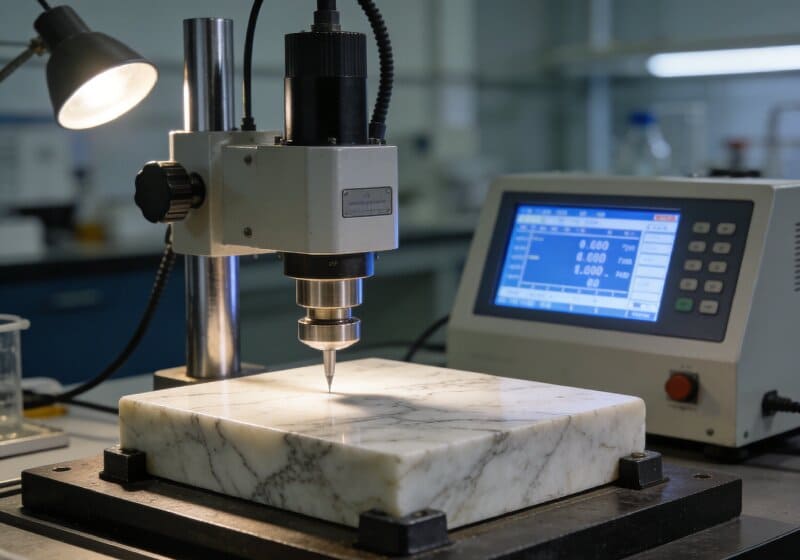
When we talk about hardness, we are talking about the stone's ability to resist scratches. This is vital for flooring and tabletops. My Italian client was worried about cutlery scratching the table tops.
The Mohs Scale of Hardness
We use the Mohs scale to grade minerals. Talc is 1 (very soft) and Diamond is 10 (very hard). Most marble falls between 3 and 4. Granite is usually between 6 and 7. This is why we recommend granite for very busy floors. However, high-quality marble can still be very durable if processed correctly. We test this by trying to scratch the surface with materials of known hardness.
Abrasion Resistance Testing
Beyond simple scratches, we test for "abrasion." This is the wear and tear from friction, like shoes walking on a floor. The test involves a machine that rubs the stone surface with an abrasive material for a set number of cycles. We measure how much thickness the stone loses.
Choosing the Right Finish
For the restaurant project, we discussed the finish. A high-gloss polish shows scratches more easily. We suggested a honed (matte) finish for the tables. It hides minor scratches better and feels more natural. The test results helped the client understand that while marble is softer than granite, the specific block we chose was dense enough to handle plates and glasses.
| Stone Type | Mohs Hardness | Best Application |
|---|---|---|
| Marble | 3 - 4 | Bathrooms, low-traffic floors, table tops |
| Granite | 6 - 7 | Kitchen counters, high-traffic floors |
| Quartzite | 7 | Kitchens, outdoor areas |
Why Should You Ask for Third-Party Inspection Reports?
Trusting a factory's word is good, but verifying that information is much better. Many buyers skip this step and regret it when quality issues arise after the shipment arrives.
Third-party inspection reports from companies like SGS or TUV offer an unbiased check of the stone's quality. They verify dimensions, finish, and physical properties, ensuring the product matches the specifications before it leaves the factory.
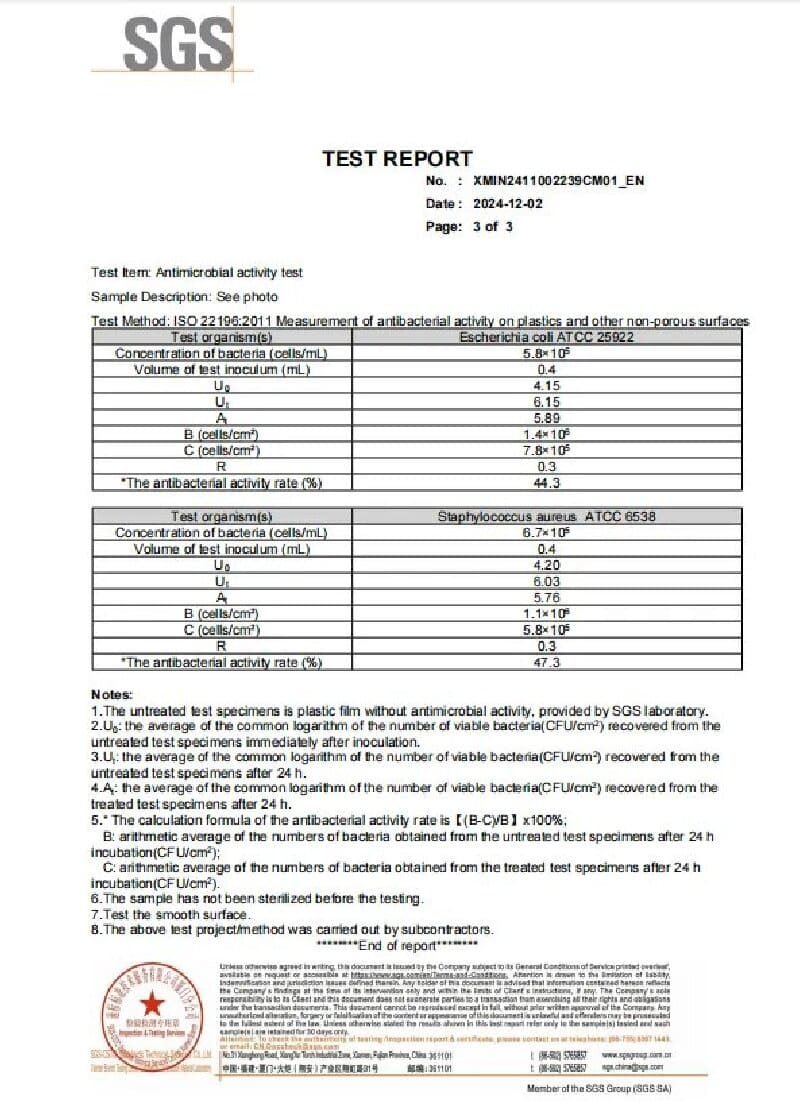
I always tell my new clients: "Do not just listen to me, look at the papers." Third-party reports are the best way to secure your investment.
The Role of Independent Inspectors
Companies like SGS are famous worldwide. They do not care if I sell the stone or not. They only care about the truth. When they come to our factory, they pick random samples. They measure the length, width, and thickness. They check for flatness. They look for physical defects like cracks or black spots.
Building Confidence with Data
Returning to my story with the Italian client, the turning point was not just my smile. It was the combination of the video call and the documents. I sent them a past report from a similar batch of marble. It showed the exact breaking strength and density. This proved that our internal testing matched international standards.
What to Look for in a Report
When you receive a report, look for these three things:
- Date of Test: Ensure it is recent and relevant to the current quarry supply.
- Sample Identity: Make sure the stone name matches what you are buying.
- The Result vs. The Standard: The report will show the result (e.g., 0.15% absorption) and the standard requirement (e.g., < 0.20%). Make sure your stone passes.
By insisting on these standards, you ensure that the container arriving at your warehouse contains exactly what you paid for.
Conclusion
Understanding standards like ASTM2 and EN3 ensures you buy durable, safe marble. At Lifeng Stone, we test strictly to guarantee your project's success and build lasting trust.
Understand the key international quality standards that govern marble production. ↩
Explore the significance of ASTM standards in ensuring marble quality and safety. ↩
Learn about EN standards and their importance in the marble industry, especially in Europe. ↩
Discover how water absorption affects marble's durability and hygiene, crucial for kitchen use. ↩
Understand the methods used to test abrasion resistance and its impact on marble longevity. ↩
Explore how marble can be safe for food contact and the standards that ensure this. ↩