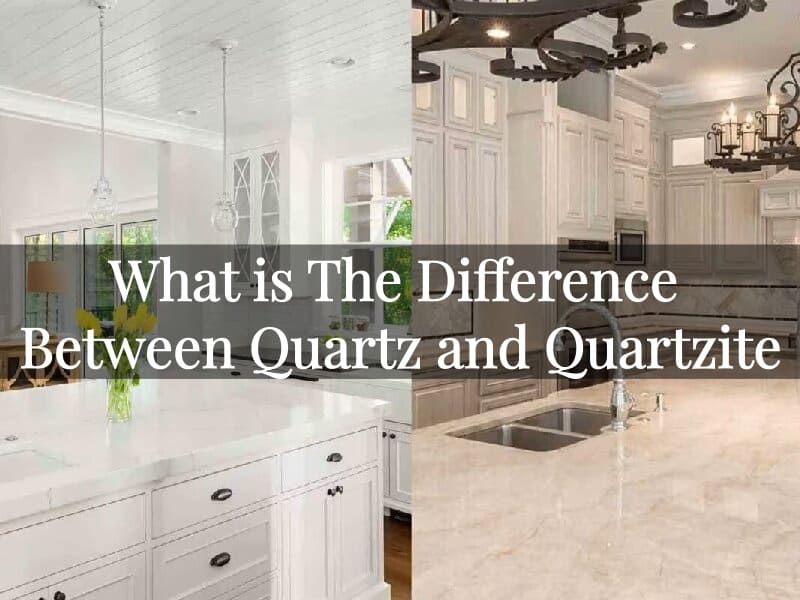
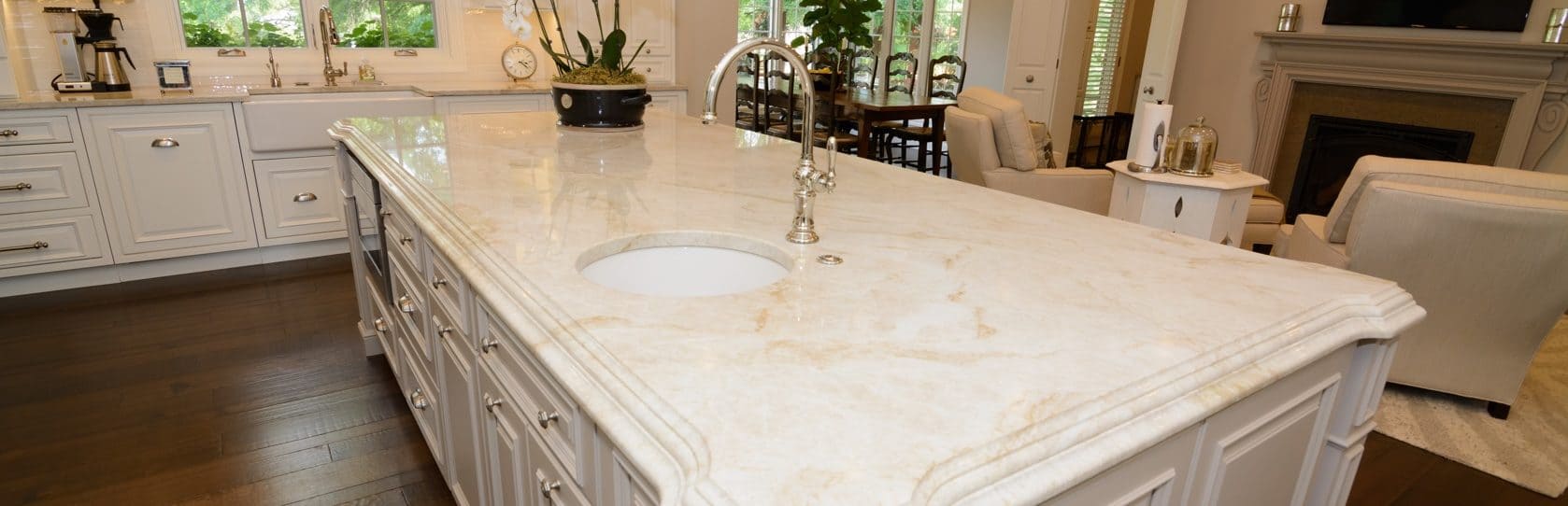
Many people confuse these two similar-sounding names. You want the best stone for your project, but making the wrong choice can waste your budget. Let me clear up the confusion.
Quartz is an engineered stone1 made from crushed stone and resin, offering uniform patterns and zero maintenance. Quartzite is a natural metamorphic rock2 that is mined from the earth, offering unique beauty and high heat resistance3. The main difference lies in their origin and maintenance requirements.
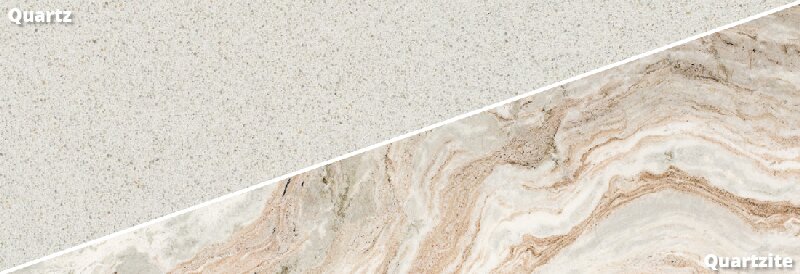
I recently spoke with a real estate developer from Florida. He was planning a high-end apartment project. He asked me a very common question: "Which one is better for investment?" I explained the differences to him based on his needs for durability and design. The following guide covers the exact points I shared with him to help you decide.
How Are Quartz and Quartzite Formed Differently?
You cannot tell the difference just by looking at the price tag. You need to know where the stone comes from. The origin defines the performance of the material.
Quartz is man-made in a factory using ground natural minerals and resin. Quartzite is 100% natural stone mined from the earth as solid blocks. One is manufactured; the other is born from nature.
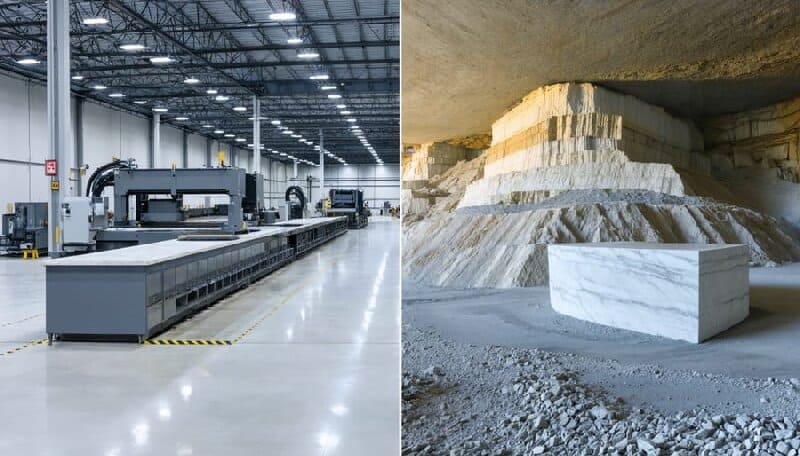
I explained to my client in Florida that understanding the formation helps you understand the product. Quartz is an engineered product. Manufacturers take about 90% to 95% ground natural quartz crystal. They mix this with 5% to 10% polymer resins and pigments. They bake this mixture in a factory. This process creates a super strong and non-porous4 slab. It is very consistent because humans control the process.
On the other hand, Quartzite starts its life as sandstone. It sits deep underground. Over millions of years, high heat and tectonic pressure change it. This process fuses the sand grains together. It turns into an extremely hard rock called quartzite. We mine it in large blocks, just like granite. Because it is natural, every block is different. When you buy quartz, you buy a formula. When you buy quartzite, you buy a piece of the earth's history.
| Feature | Quartz (Engineered) | Quartzite (Natural) |
|---|---|---|
| Origin | Man-made in factories | Mined from the earth |
| Composition | Crushed stone + Resin | 100% Natural Stone |
| Porosity | Non-porous | Porous (needs sealing5) |
Which Stone Offers Better Visual Appeal?
Design matters for your project's success. You want a specific look for your space. One stone offers consistency, while the other offers uniqueness. Which style fits your vision?
Quartz offers consistent patterns and unlimited color options because it is manufactured. Quartzite offers unique, unrepeatable veining that looks like marble but is harder.
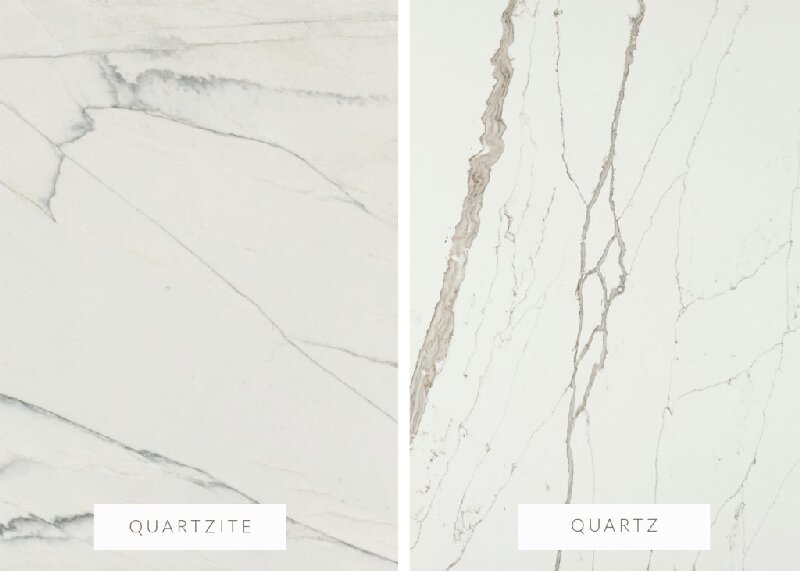
This was a major point for the Florida developer's project. He wanted the apartments to look clean and modern. For this, Quartz was the perfect choice. Since it is man-made, we can control the color and pattern. We can make it look like white marble, concrete, or even bright colors. Every slab looks the same. This uniformity is great for large projects where you want every kitchen to match perfectly.
However, he wanted something special for the lobby and the model room bar. That is where Quartzite shines. Quartzite has a "wow" factor that you cannot copy in a factory. It has swirling grey and white veins. It sparkles naturally because of the quartz crystals. It often looks like high-end marble, but it has a glass-like depth. I advised him to use Quartzite for these focal points. It creates a sense of luxury. The natural variation means no two pieces are alike. This gives the space a high-end, custom feel.
Is Quartzite Harder and More Durable Than Quartz?
Kitchens see a lot of action every day. You need a surface that resists scratches and heat. A weak stone ruins the kitchen experience and costs money to fix.
Quartzite is actually harder than quartz on the Mohs scale. However, quartz is more flexible and less likely to chip, though it cannot handle high heat like quartzite can.
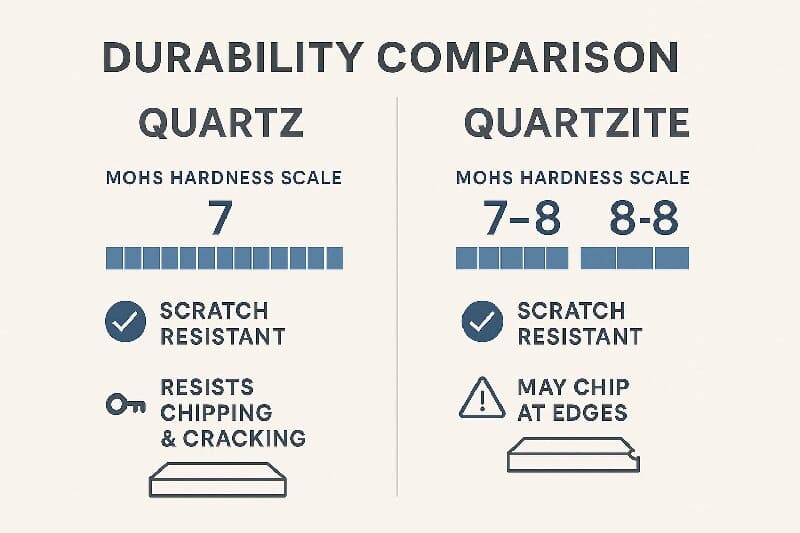
Many people think "engineered" means stronger, but nature is very powerful. On the Mohs scale of mineral hardness, Quartzite is about a 7 or 8. It is harder than a steel knife. It is even harder than granite. It will not scratch easily. It is also heat resistant. You can put a hot pan directly on Quartzite, and it will not melt. This is because it was formed by heat underground.
Quartz is also very durable, but in a different way. It is about a 7 on the hardness scale. It is very hard, but the resin makes it a little flexible. This means it is less likely to chip if you drop a heavy pot on the edge. However, the resin is plastic. If you put a hot pan on Quartz, the resin can burn or melt. You must use a trivet. For the Florida apartments, the developer liked that Quartz does not chip easily, which is good for rental units.
Which Surface Is Easier to Maintain in Daily Life?
Nobody likes scrubbing stains for hours. You want a countertop that stays clean easily. High maintenance means more headaches for you and your customers.
Quartz is the winner for low maintenance because it is non-porous4 and needs no sealing5. Quartzite requires regular sealing5 to prevent stains from oil and wine.
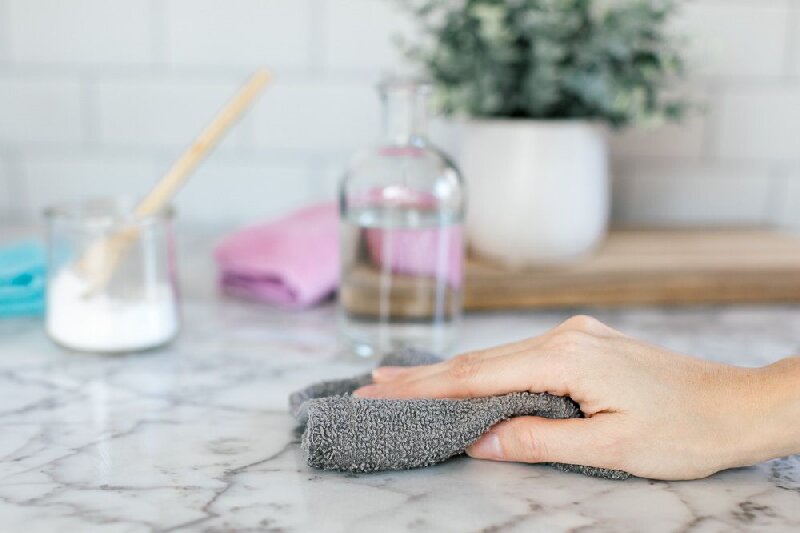
Maintenance was the deciding factor for the kitchens in the Florida project. I told the developer that tenants might not take good care of the stone. Quartz is non-porous4. This means liquids like wine, coffee, or oil cannot sink into the stone. It resists bacteria and stains naturally. You never need to seal it. You just wipe it with soap and water. It is very easy to live with.
Quartzite is different. Because it is a natural stone, it has tiny pores. If you spill red wine on unsealed Quartzite, it can leave a permanent mark. You must seal Quartzite at least once a year. Sealing is not difficult, but it is an extra step. If you skip it, the stone can get ruined. For the lobby bar, the developer was okay with this because he has staff to clean it. But for the individual apartments, Quartz was the smarter choice to avoid complaints.
How Do Prices Compare Between These Stones?
Budget drives every business decision you make. You need to know the cost before you buy. Overspending on material cuts into your profit margin significantly.
Quartzite is generally more expensive due to the complexity of mining and cutting. Quartz prices vary but are usually lower and more predictable for large projects.
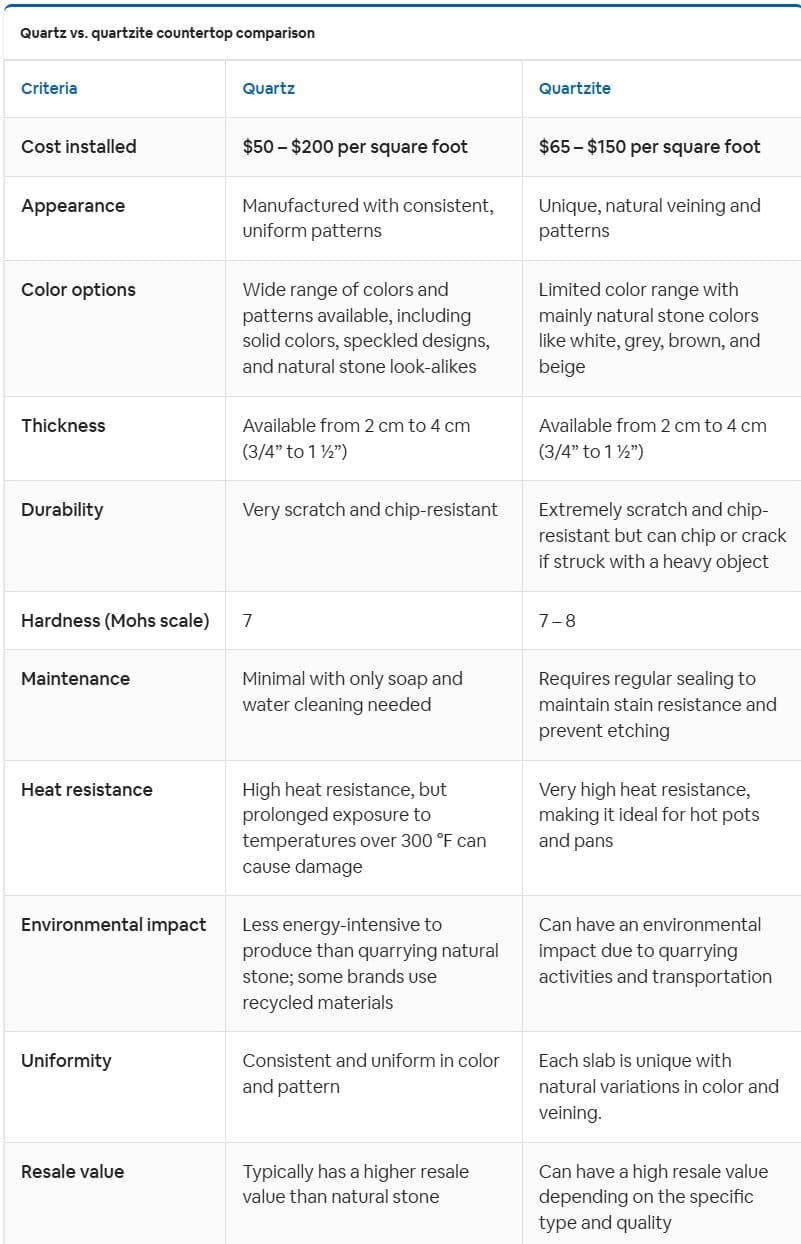
Price is always a big topic. Generally speaking, Quartzite costs more than Quartz. This is because mining natural stone is hard work. We have to cut it from the mountain and transport heavy blocks. Also, because Quartzite is so hard, it destroys our cutting blades faster. It takes more time and labor to cut a slab of Quartzite than a slab of granite or marble. This fabrication cost adds to the final price.
Quartz is usually more affordable. Since we make it in the factory, the supply is stable. There are different price tiers. Simple colors are cheap. Designs that look like Calacatta marble cost more. But overall, for a large project like the one in Florida, Quartz helps control the budget. The developer saved money by using Quartz in the 200 kitchens. He spent a little extra on Quartzite for the lobby to add value. This balanced approach gave him the best return on investment.
Price Factors Table
| Factor | Quartz | Quartzite |
|---|---|---|
| Material Cost | Moderate | High |
| Fabrication Labor | Standard | High (Hard to cut) |
| Availability | High (Factory made) | Variable (Nature dependent) |
Conclusion
Quartz is practical, uniform, and maintenance-free, while Quartzite is natural, unique, and heat-resistant. Choose Quartz for ease of use and Quartzite for luxury and distinct beauty.
Learn about the manufacturing process of engineered stone and its benefits for modern construction and design. ↩
Understand the properties and applications of natural metamorphic rocks like Quartzite in architecture and design. ↩
Learn about the heat resistance properties of these stones to make a suitable choice for your kitchen. ↩
Understand the advantages of non-porous materials like Quartz for easy maintenance and hygiene. ↩
Get insights on the sealing process for Quartzite to maintain its beauty and prevent stains. ↩