You worry about your kitchen renovation. Choosing the wrong stone thickness can lead to cracks and wasted money. You need to know if a thinner slab is safe.
Yes, 20mm marble is suitable for kitchen countertops. It offers a sleek, modern aesthetic and sufficient structural strength1 when properly supported by a plywood subtop2. However, it requires careful installation and regular sealing to withstand daily wear and tear compared to thicker options.
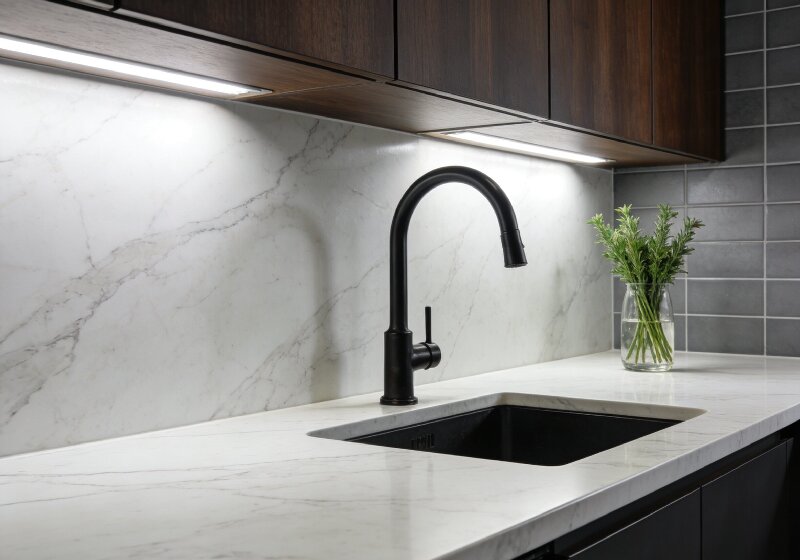
A few years ago, I worked with a high-end restaurant in New York. They chose our 20mm marble for their open kitchen counters. After we installed it, the head chef was very happy. He told the guests, "This countertop is not just beautiful; it makes the kitchen look more professional."
But, the restaurant manager called me a few months later. He shared a real situation. In a commercial kitchen, the counter takes a lot of abuse. There is frequent cutting, hot pans, and spilled sauces. The 20mm marble was strong enough structurally. It did not break. However, they found the surface got light scratches and stains easily. They had to do professional maintenance often. The manager said honestly, "It really improved the restaurant's class, but the maintenance cost is higher than we thought." This experience taught me that 20mm marble is strong and beautiful, but it needs extra care in busy places.
Is 20mm marble strong enough for heavy cooking?
You fear that a thinner stone might snap under a heavy pot. You need to trust that your countertop will support your daily cooking tasks without failure.
20mm marble is strong enough for heavy cooking, but it usually requires a plywood underlayment for support. This extra layer adds stability and prevents cracking, making the 20mm slab just as durable as a thicker piece for standard kitchen use.
Understanding Structural Integrity
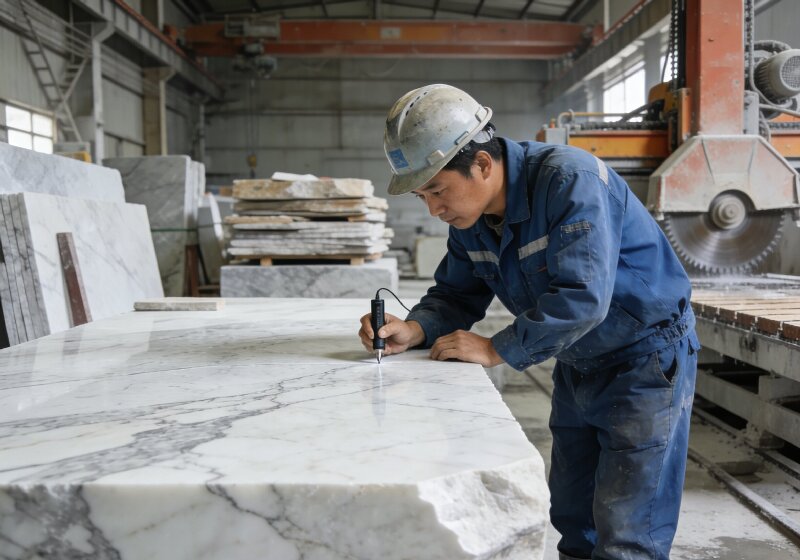
When we talk about strength, we need to look at how we install the stone. I have seen many clients worry that 20mm is too fragile. It is true that marble is a natural stone. It has veins. These veins can be weak points. However, the thickness is not the only thing that matters. The support underneath is the most important part.
The Role of the Subtop
For 20mm marble, we almost always recommend a subtop. This is usually a sheet of plywood or MDF.
- Support: The plywood sits on top of your cabinets. The marble sits on the plywood. This absorbs the shock if you drop a heavy pot.
- Flexibility: Houses settle and move slightly. The wood layer helps the stone handle this movement without cracking.
- Span: If you have a dishwasher or a wide cabinet, the stone needs help to bridge that gap. The 20mm stone alone might sag over time, but with plywood, it stays flat.
If you choose 30mm marble, you can often install it directly on the cabinets. But for 20mm, the subtop is the secret to its strength. In my factory in Quanzhou, we test these slabs. We know that a supported 20mm slab handles weight very well. It is rare for it to crack if the installer does a good job.
Comparison of Installation Methods
| Feature | 20mm Marble Installation | 30mm Marble Installation |
|---|---|---|
| Support Needed | Requires full plywood or MDF subtop. | Can sit directly on cabinet frames. |
| Weight | Lighter, easier to lift and carry. | Heavier, harder to maneuver. |
| Risk of Cracking | Low (if supported properly). | Low (due to thickness). |
| Overhang Limit | Needs brackets for overhangs > 20cm. | Can handle slightly larger overhangs alone. |
You can see that the strength comes from the system, not just the stone. If you have a good contractor, 20mm is perfectly safe.
Does a thinner profile look modern and expensive?
You want your kitchen to look current and stylish. You are afraid that a thin edge might look cheap or flimsy compared to traditional thick stones.
A 20mm profile looks very modern and is currently a top trend in European and American designs. It provides a minimalist, sleek appearance that works well in contemporary kitchens, and it can also be built up to look thicker if desired.
The Minimalist Trend
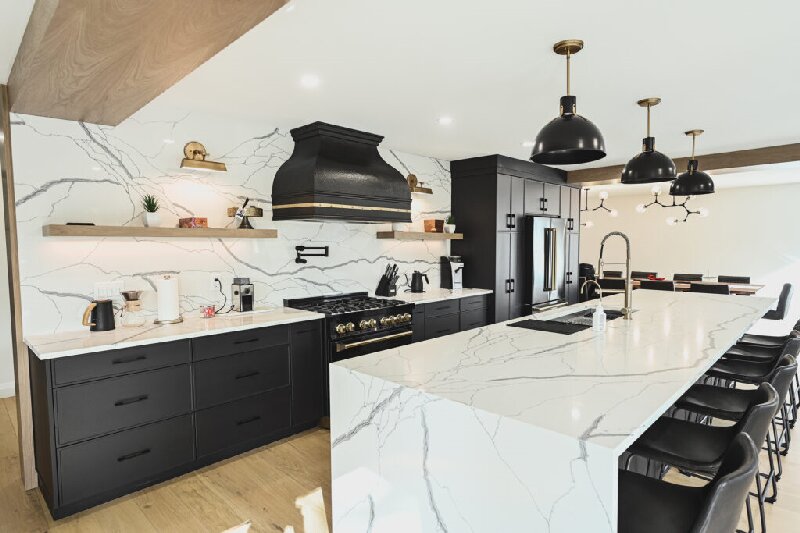
In the past, everyone wanted thick, heavy stone. It felt like a castle. Today, things are changing. My clients in Europe and the US often ask for a "lighter" look. They want clean lines. A 20mm edge gives you this. It looks sharp and refined. It does not dominate the room. It lets the beauty of the marble veins stand out more than the bulk of the stone.
Creating a Thicker Look
Sometimes, you want the safety of 20mm but the look of a thick block. We can do this easily. We use a technique called a "mitered edge3."
- We cut the edge of the 20mm slab at a 45-degree angle.
- We cut a separate strip of stone at a 45-degree angle.
- We glue them together.
This makes the stone look like it is 40mm, 50mm, or even 100mm thick. But inside, it is hollow. This is great because it is lighter on your cabinets. You get the expensive, chunky look without the extreme weight of a solid block.
Design Versatility
I have seen designers use 20mm slabs for more than just counters. Because it is lighter, they use the same stone for the backsplash. They run it up the wall. This creates a seamless flow. It is much harder to do this with heavy 30mm slabs.
Edge Profile Options
| Edge Style | Effect on 20mm Marble | Best For |
|---|---|---|
| Eased Edge | Simple, square, flat. Shows true thickness. | Modern, minimalist kitchens. |
| Mitered Edge | Glued edge to fake a thicker look (e.g., 50mm). | Luxury islands, "chunky" look. |
| Bullnose | Rounded edge. Makes 20mm look very thin. | Traditional (less popular now). |
| Waterfall | Stone flows down the side of the cabinet to the floor. | High-end dramatic islands. |
So, 20mm does not mean it looks cheap. It actually gives you more design choices. You can keep it thin for a modern vibe or build it up for a luxury feel.
Will choosing 20mm save you money?
Renovations are expensive, and you need to stay on budget. You want to know if selecting a thinner material will significantly lower your total project cost.
Choosing 20mm marble will usually save you money on the material cost compared to 30mm slabs. However, you must consider the installation costs, as the labor for adding a subtop or mitered edge3s can sometimes offset the savings on the stone itself.
Material Cost Savings
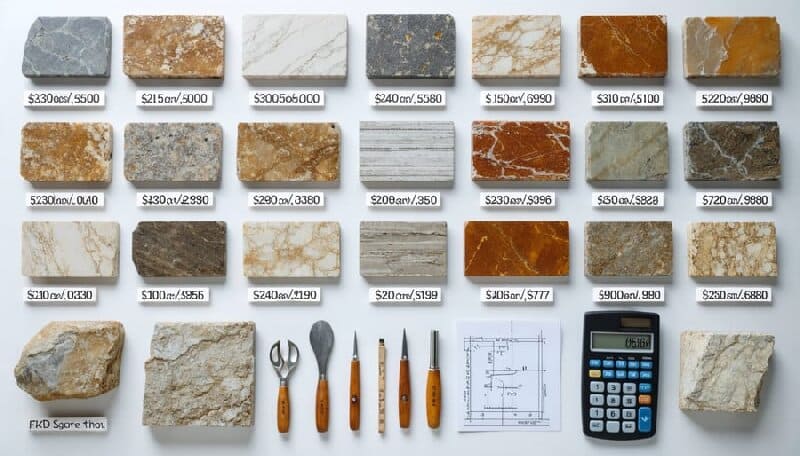
The stone itself is cheaper. This is simple math. A 20mm slab uses less raw material than a 30mm slab. When we cut blocks in our factory in Shuitou, we can get more slabs out of one block if we cut them thinner.
- For Homeowners: You pay less per square meter for the slab.
- For Wholesalers: This is a big advantage. You can fit more slabs into a shipping container. A container has a weight limit. 20mm slabs are lighter. So, you can ship more product for the same shipping price. This lowers your landed cost per slab significantly.
Installation Labor Costs
Here is where it gets tricky. You save on the stone, but you might pay more for labor. If you install 20mm, your installer needs to put down plywood first. This takes time. They have to cut the wood, screw it down, and make sure it is level. If you install 30mm, they often skip this step. Also, if you want that thick look I mentioned earlier (mitered edge3), that costs extra. The fabricator has to cut and glue the edges. This is skilled work.
Shipping and Handling
From my perspective as a manufacturer, 20mm is easier to handle. My workers can move these slabs with less risk of back injury. Transport is cheaper. If you are importing from China, the freight cost is a huge part of the price. Being able to load 60 or 70 slabs in a container instead of 45 makes a big difference to your bottom line.
Cost Breakdown Estimation
| Cost Factor | 20mm Marble | 30mm Marble | Verdict |
|---|---|---|---|
| Material Price | Lower (approx. 20-30% less). | Higher. | 20mm Wins. |
| Shipping Cost | Lower per unit (more fit in container). | Higher per unit. | 20mm Wins. |
| Subtop Labor | Required (adds cost). | Not usually required. | 30mm Wins. |
| Fabrication | Similar for simple edges. Higher for mitered. | Standard. | Tie. |
If you want a simple edge and you are buying a lot of stone, 20mm is definitely the cheaper choice. If you are doing a small, complex kitchen, the prices might end up being close.
Is maintenance difficult for thinner slabs?
You are afraid that a thinner stone will stain or etch faster than a thick one. You need to know the reality of living with 20mm marble daily.
Maintenance for 20mm marble is similar to thicker stone regarding surface care, but it requires diligence. The thickness does not change the porosity, so sealing is vital to prevent stains, just as the NYC restaurant manager discovered with heavy use.
Surface Durability vs. Thickness
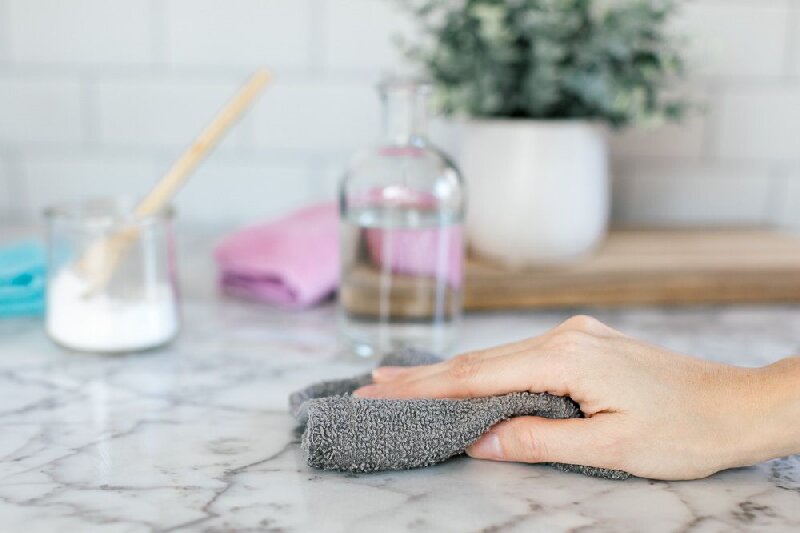
I want to go back to the story about the restaurant in New York. The manager complained about scratches and stains. It is important to understand this: The thickness of the stone does not change the surface hardness. A 20mm piece of Carrara marble has the same surface as a 30mm piece. They are the same stone. If you spill wine on 20mm, it stains just as fast as it would on 30mm. The issue the restaurant faced was volume. They used the surface hundreds of times a day. For a home kitchen, you will not have this much traffic. But the lesson is valid. Marble is soft. It is calcium carbonate. Acid (like lemon or vinegar) will eat into it. This is called etching.
Preventing Damage
Because 20mm is thinner, you might feel like you need to baby it. You do not need to be scared, but you need to be smart.
- Sealing: You must seal the stone. We seal our products before they leave the factory, but you should do it again after installation. And you should do it every year.
- Impact: While the plywood helps, a heavy impact on a 20mm edge (if it is not mitered) can chip it. The edge is thinner, so there is less mass to absorb a hit.
- Heat: Do not put hot pans directly on the stone. This is true for any thickness, but thermal shock4 can be risky for thinner natural stones if the temperature change is extreme.
Professional Advice for Buyers
If you are a wholesaler selling to homeowners, be honest. Tell them 20mm is strong, but tell them about the maintenance. If you are a homeowner, ask yourself: "Am I okay with a patina5?" Marble ages. It gets marks. The New York chef loved the "professional" look, but the manager hated the cost of fixing it. If you want it to look brand new forever, marble (of any thickness) might be hard for you.
Maintenance Checklist
| Task | Frequency | Purpose |
|---|---|---|
| Wipe Spills | Immediately. | Prevents acid etching and dark stains. |
| Apply Sealer | Every 6-12 months. | Fills pores to stop liquid absorption. |
| Use Cutting Boards | Always. | Prevents scratches (Marble is soft). |
| Use Trivets | Always. | Prevents thermal shock4 and burn marks. |
The maintenance is about the material, not the thickness. Treat it with respect, and it will last for decades.
Conclusion
20mm marble is a great choice for kitchens if you support it with plywood. It saves money and looks modern, but you must seal it regularly to keep it beautiful.
Understand the importance of structural strength in choosing the right marble for your kitchen. ↩
Learn how a plywood subtop enhances the durability and stability of marble countertops. ↩
Find out how a mitered edge can create a thicker appearance for 20mm marble. ↩
Learn about thermal shock and how to prevent damage to your marble surfaces. ↩
Discover what patina is and how it affects the appearance of marble over time. ↩