
Finding the perfect marble slab can feel overwhelming because every piece is different. If you pick the wrong one, you might end up with cracks or bad colors that ruin your project. But do not worry, I can help you find the best stone.
To choose quality marble slabs, you must inspect the surface for a uniform polish and clear, natural veining. Check the structure for deep cracks1 or fissures that could break. Always verify the thickness is consistent, usually 18mm or 20mm, and ask for photos or videos to see the real texture.

Last year, an interior designer from Melbourne, Australia, contacted me. He needed marble for a very expensive house. He told me, "I do not care about the price, but I must see the real texture and shine." He wanted a stone with "soul," not just a cold product. This made me realize that choosing marble is about more than just measurements. It is about the feeling and the quality. Here is how we do it.
Does the marble look right and have a consistent pattern?
You want your project to look beautiful and expensive. If the marble has ugly spots or bad colors, it will look cheap. You need to know what to look for.
The most important visual check is the consistency of the background color and the flow of the veins. Quality marble has a clear pattern without muddy spots or unexpected color changes. You should look for a slab that matches the specific style or "soul" of your design vision.
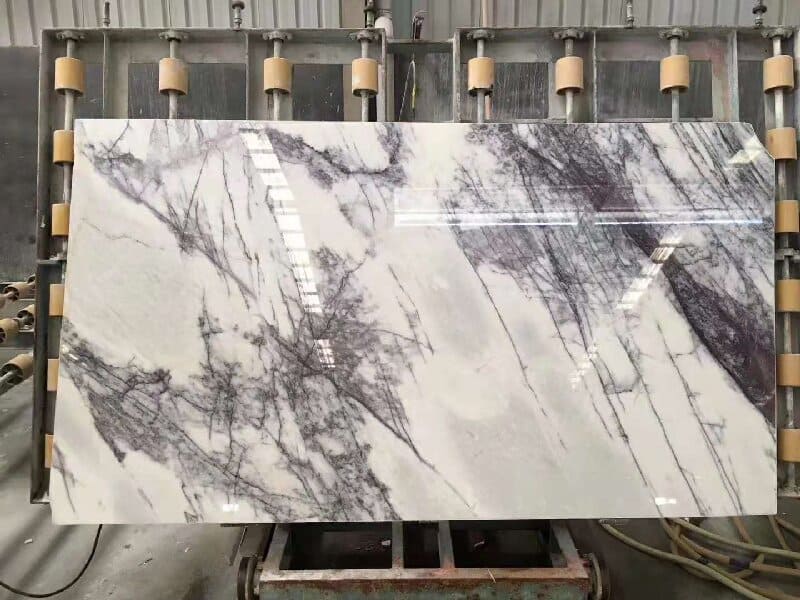
When I worked with the client from Melbourne, we looked at many white marble slabs. He was very specific. He did not just want "white." He wanted a specific feeling. We looked at the patterns carefully. He pointed to one slab with fine grey lines and said it looked like "mountains in the morning mist." This is what I mean by looking for the right pattern.
To understand this better, you need to break down the visual parts of the stone. You cannot just glance at it. You have to look deep. Here is how I analyze the look of a slab:
| Feature | What to Look For | What to Avoid |
|---|---|---|
| Background Color | The white or base color should be clean and pure. | Avoid "muddy" or yellowish tones if the stone is supposed to be white. |
| Vein Movement | The lines should flow naturally across the slab. | Avoid lines that stop suddenly or look like a mistake. |
| Crystal Size | Good marble usually has small, tight crystals. | Big, loose crystals can make the stone look like sugar and absorb water easily. |
| Defects | The surface should be free of black spots (called gall) unless it is part of the style. | Avoid large rust spots or dark marks that distract the eye. |
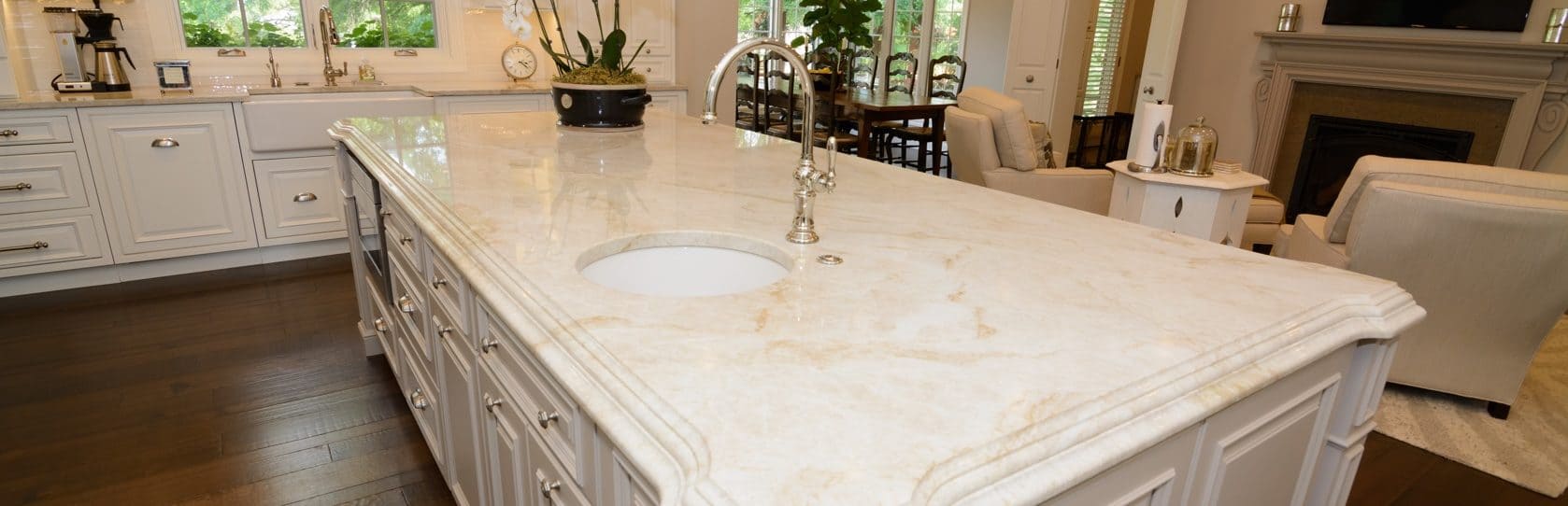
You must think about where the stone will go. If it is for a kitchen island, the "face" of the slab is the most important thing. My Australian client made that "morning mist" slab the center of the kitchen. It became the most important part of the room. If we had picked a slab with messy lines, the whole kitchen would have felt wrong. You must trust your eyes, but you also need to compare different blocks to find the best match.
Is the stone strong and free of dangerous cracks?
Marble is a natural stone, so it is never 100% perfect. However, some cracks are dangerous and can cause the stone to break during installation. You must check the strength.
Inspect the slab closely for fissures, which are natural lines, versus cracks, which are actual breaks. Run your fingernail over the line; if it catches, it is likely a crack. Also, check the back of the slab for heavy mesh netting, which might mean the stone is fragile.
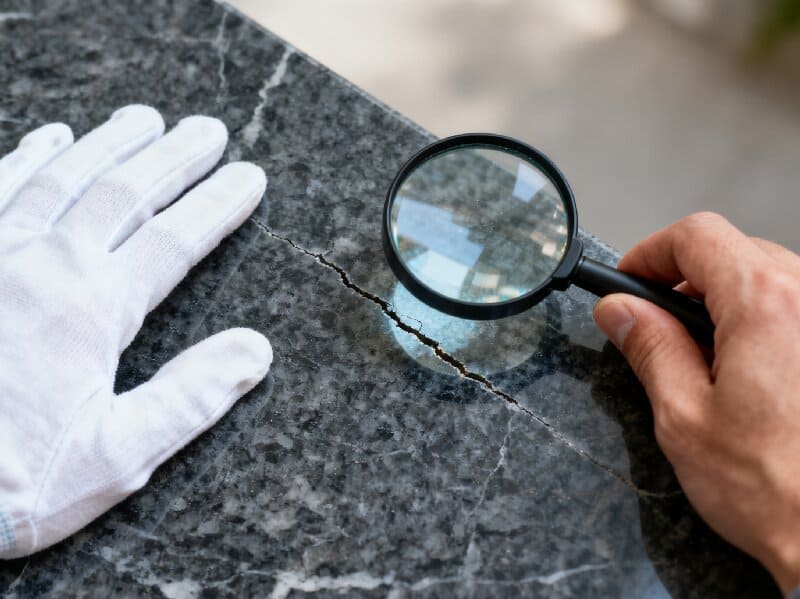
Strength is not just about not breaking. It is about how long the stone will last. In my factory in Shuitou, we treat every slab carefully. But nature creates weak points. When I talked to the designer, we discussed "back mesh treatment." This is a net glued to the back of the slab.
Here is a deeper look at how to judge the physical quality of the stone. This requires critical thinking about how the stone was made and processed.
- Fissures vs. Cracks: This is the hardest part. A fissure is a natural line where the minerals changed. It is part of the stone. A crack is a break.
- Test: I use the "sound test." I tap the stone. If it rings like a bell, it is solid. If it sounds dull or makes a "thud," it might have a crack inside.
- Visual: Shine a light at an angle. A crack will often show a reflection break.
- Thickness: Standard slabs are usually 18mm or 20mm. Some factories try to save money by cutting them to 15mm or 16mm.
- Why it matters: Thin slabs break easily. They are hard to install. Always measure the edge.
- Resin and Filling: Most marble has some resin to fill tiny holes. This is normal.
- Quality Check: The resin should be high quality. It should not turn yellow over time. If you see big patches of glue, it means the stone had big holes. This is lower quality.
We ensure our slabs are solid. For the Melbourne project, we checked the edges to make sure they were strong enough for a mitered edge (where two pieces join at 90 degrees). If the stone is too brittle, you cannot do fancy edge work.
How good is the polishing and surface finish?
A good polish makes the colors pop and protects the stone. A bad polish looks dull and cheap. You need to check how the factory finished the surface.
Check the gloss level by standing to the side and looking at how light reflects off the slab. A high-quality polish acts like a mirror and has no hazy spots. Run your hand over the surface to make sure there are no waves or ripples from bad machinery.
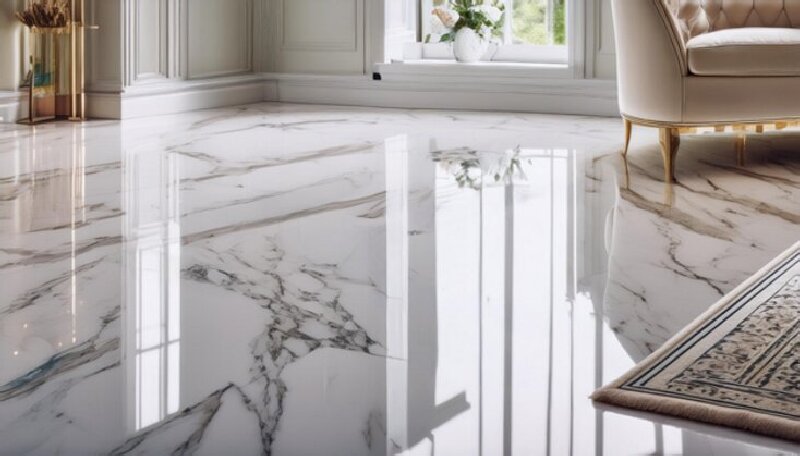
The Australian designer told me, "I want to see the gloss." He did not want a matte finish. He wanted the stone to shine. In our video call, I moved the camera so he could see the factory lights reflecting on the stone.
Let's dive deeper into surface quality. This is where manufacturing skill really matters.
- Degree of Polish: We measure this with a gloss meter.
- Standard: Good marble should be polished to over 90 degrees.
- Visual Test: Can you see your face clearly in the stone? If your reflection is blurry, the polish is low quality.
- Flatness (No Waves): Sometimes, if the polishing machine is old or the pads are bad, the surface gets waves.
- How to check: Look at the reflection of a straight line (like a fluorescent light tube) on the stone. If the reflection looks squiggly or wavy, the surface is not flat.
- Scratches: Look for "sanding marks2." These are circular scratches left by the polishing pads.
- Why they happen: The factory skipped a step in polishing.
- Result: These marks are hard to see indoors but show up very clearly in sunlight.
- Edge Processing: Even if you buy raw slabs, look at the edges. are they chipped? Clean edges show the stone cuts well.
For the "Morning Mist" slab, the polish was perfect. It looked wet, even when it was dry. This depth of polish is what gives luxury stone its value. It makes the cleaning easier too. If the surface is rough, dirt sticks to it. A smooth surface stays clean.
How can you inspect slabs if you are not in China?
Many of my clients are overseas. You cannot always fly to China to see the stone. You need a reliable way to check quality from far away.
Use live video calls and high-resolution photos to inspect the slabs in real-time. Ask the supplier to show the specific block numbers and zoom in on details. This allows you to control the quality and select the exact pieces you want without traveling.
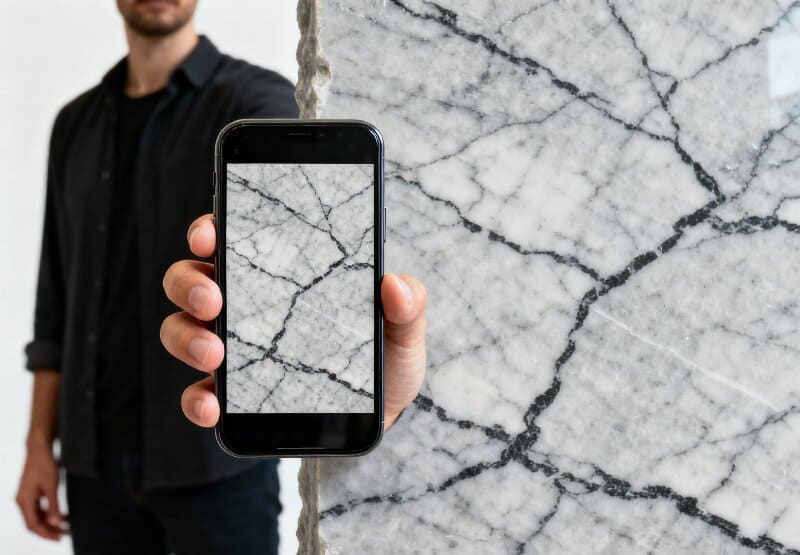
This is exactly what I did with my client. We did a video call. It is different from just looking at a photo. Photos can be edited. Video is real.
Here is a detailed guide on how to manage remote inspection effectively. This is a system I use with wholesalers and designers globally.
- The Video Strategy:
- Do not just ask for a video file. Ask for a live call.
- Ask the supplier to wipe the stone with a wet cloth. This simulates what the stone looks like when sealed. It shows the true color.
- Ask them to move the camera slowly. Fast movement hides defects.
- Batch and Block Numbers:
- Marble comes in blocks. Slabs from the same block look the same.
- Critical Step: Ask to see the side of the slab where the number is spray-painted. Record this number.
- Why: When the container arrives, you check the numbers. If they match, you got the right stone. My Australian client required us to confirm every number before loading.
- Dry Lay Service:
- If you have a complex floor pattern, ask the factory to do a "dry lay."
- We lay the slabs out on the factory floor in the order they will be installed.
- We label them (1, 2, 3...). This ensures the veins match up perfectly (book-matching).
- Lighting:
- Ask the supplier to turn on all lights or move the slab to natural sunlight. Factory warehouses can be dark. You need to see the stone in bright light to spot cracks.
The designer later emailed me photos of the finished kitchen. He said, "Thank you for your patience. These stones really tell a story." That success happened because we spent time on the video call checking every detail.
Conclusion
Choosing quality marble requires checking the visual pattern3, structural strength, surface polish, and using technology for remote inspection. By paying attention to these details, you ensure your project has the "soul" and durability it deserves.