leading paragraph: You spent a fortune on beautiful marble. Now you are terrified that one hot pan will ruin it forever. Is this fear justified, or is it a myth?
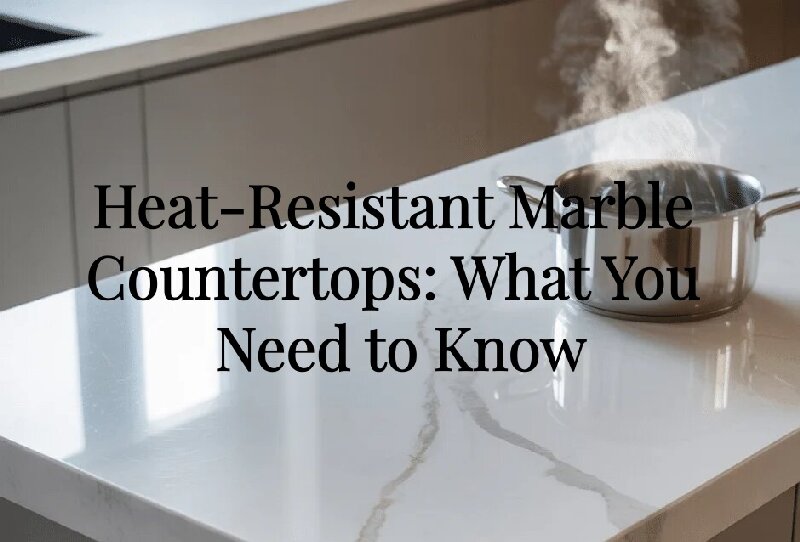
snippet paragraph: Marble is naturally heat resistant1 and handles high temperatures well because it forms deep underground. However, rapid temperature changes can cause cracks, and hot pans may damage the protective sealer2. Always use trivets3 or hot pads to keep your stone looking new and avoid surface marks4.
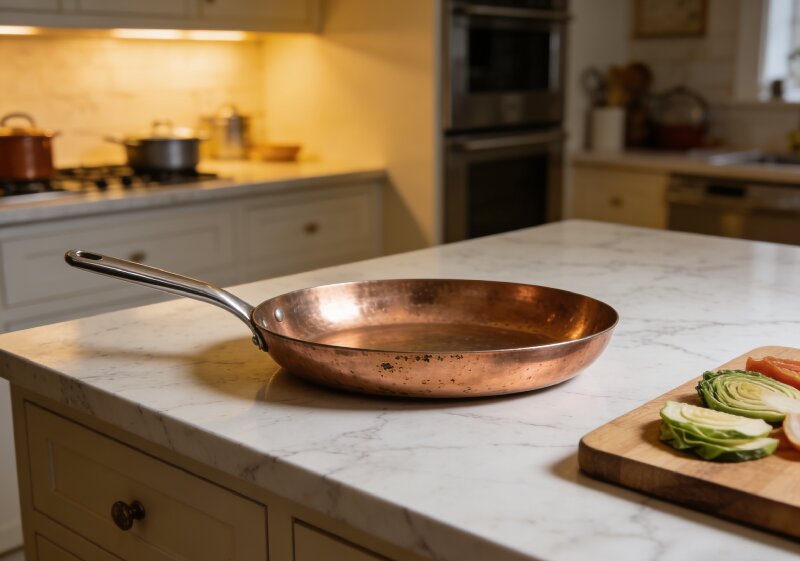
Transition Paragraph: Let me tell you a story about a client named Mike. He thought he ruined his new kitchen island, but the truth surprised him. This story will help you understand your own countertops.
LOOP START
Did a Hot Pizza Pan Ruin the Countertop?
leading paragraph: Last summer, Mike from Texas called me in a panic. A family dinner had seemingly turned into a disaster for his beautiful new kitchen island.
snippet paragraph: He placed a hot pizza pan directly on our Carrara White marble5. A white mark appeared immediately. He thought the stone was burned, but the damage was actually superficial and easy to fix.
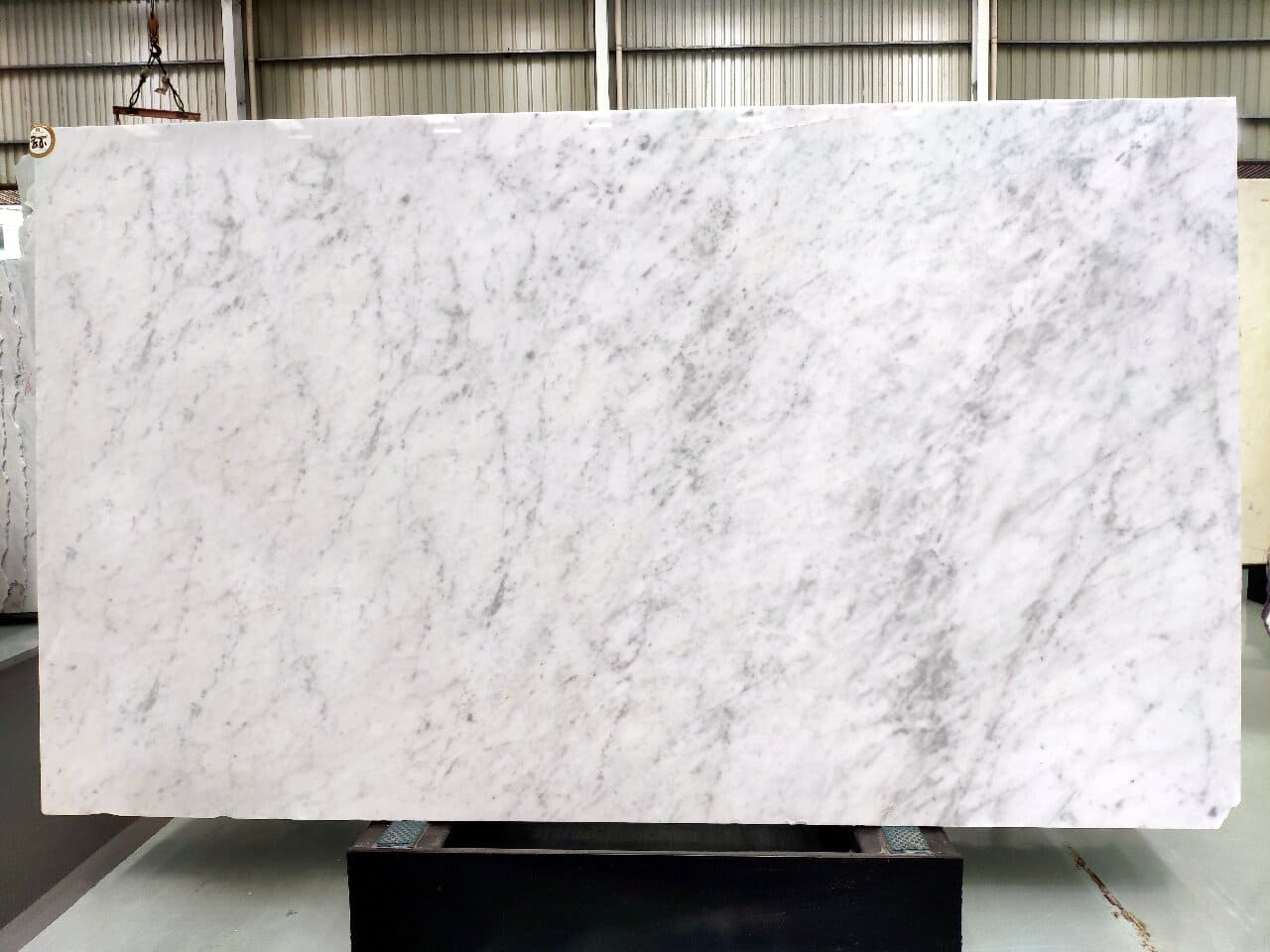
Dive deeper Paragraph: I remember the email vividly. Mike had just installed the Carrara White marble5 we exported from our factory in Shuitou. During a party, he put a hot pizza pan right on the stone. He did not use a heat pad. When he lifted the pan later, there was a white mark. He was very upset. He showed me the spot on a video call. "It looks like a burn!" he said. His wife even wanted to switch to artificial quartz. I told him to calm down. I asked him to touch the spot with a clean finger. He did it. He was surprised. The stone felt smooth. There was no hole or deep damage. The mark was just on the surface.
This happens often with our clients. People think marble is weak. They think it is very delicate. It is not. But you must know how to look at it. The mark was actually the sealer2 reacting to the heat. It was not the stone itself. This distinction is very important for every owner to understand. Real stone is tough. It does not burn like wood or plastic. Mike's panic was real, but the problem was small. We see this at Lifeng Stone often. We supply many wholesalers, and they ask the same things. Understanding the difference between a stone burn and a sealer2 mark saves you a lot of worry.
LOOP END
LOOP START
How Much Heat Can Natural Marble Withstand?
leading paragraph: You might wonder if stone can melt or burn. The geological history of marble gives us the answer to this common and important question.
snippet paragraph: Marble forms under extreme heat and pressure deep in the earth. It can withstand temperatures around 480°C (900°F). This is much hotter than your typical kitchen pots and pans.
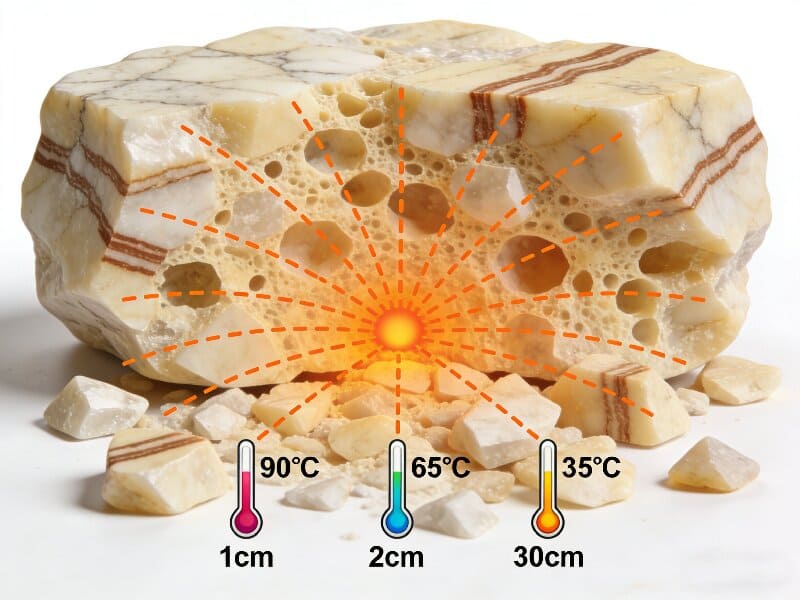
Dive deeper Paragraph: I explained the science to Mike. Marble is a metamorphic rock. This means it was born in fire. It forms deep inside the earth. The pressure is high there. The temperature is very high too. Because of this start, marble is naturally tough against heat. It is much better than plastic or wood. It is also better than some man-made stones that use resin. Resin can melt at lower temperatures. Marble can handle up to 480°C. Your oven usually goes to 250°C. So, the heat itself is not the big enemy.
The real danger is something else. We call it "thermal shock6." This happens when something cold gets very hot, very fast. Or the other way around. This rapid change can cause small cracks. It expands and shrinks too quickly. That is the physics of the stone. So while the stone won't burn like wood, it still needs respect. In our factory in Fujian, we cut these stones with powerful machines. We know how strong they are. But even strong things have limits. Thermal shock is rare in a kitchen, but it is possible. It is the main reason we suggest caution. It is not because the stone will melt. It is because the stone might crack if the temperature jumps too fast.
LOOP END
LOOP START
Is the Damage on the Stone or the Coating?
leading paragraph: Seeing a white spot is scary. But often, what you see is not damage to the rock, but to its invisible shield.
snippet paragraph: Modern countertops have a chemical sealer2 to stop stains. High heat can damage this layer, causing a cloudy or white look. The stone underneath remains unharmed and intact.
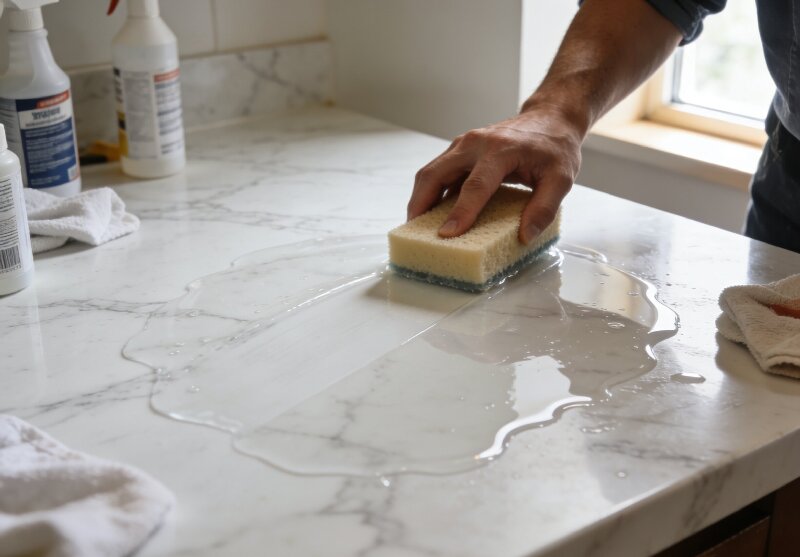
Dive deeper Paragraph: This was the key for Mike. The white mark was "hazing." We seal our stone before it leaves our factory in China. This sealer2 prevents wine or oil from sinking in. It is a chemical layer. When you put a 200-degree pan on it, the chemical reacts. It can turn foggy. It looks like a burn on the stone, but it is just the coating. This is good news. It means the expensive rock is safe.
| Type of Damage | Cause | Appearance | Repair Difficulty |
|---|---|---|---|
| Thermal Shock | Rapid temp change | Crack or fracture | Hard / Needs Pro |
| Sealer Haze | Hot pan on surface | White, cloudy spot | Easy / DIY |
| Etching | Acid (lemon/vinegar) | Dull spot | Moderate / Polishing |
It is vital to know the difference. Mike felt much better knowing this. He realized his kitchen island was not ruined. It just had a small surface wound. The sealer2 took the hit to save the stone. Sealers are like a sacrificial layer. They take the abuse so the stone does not have to. If you see a mark, check the texture. If it is smooth, it is likely the sealer2. If it is rough, it might be the stone. But usually, in a kitchen, it is just the sealer2.
LOOP END
LOOP START
Can You Restore the Shine After a Heat Mishap?
leading paragraph: Accidents happen in every kitchen. The good news is that marble is forgiving and often allows for quick, simple repairs without professionals.
snippet paragraph: You can often fix surface marks4 with marble polishing powder7. Gently buff the area for a few minutes. This removes the damaged sealer2 and restores the original shine.
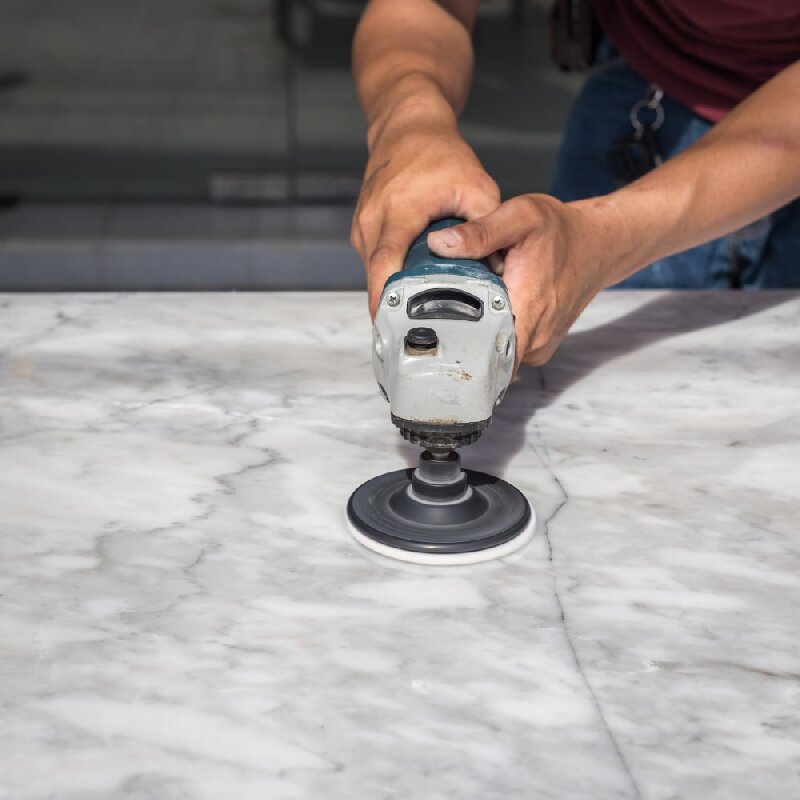
Dive deeper Paragraph: I told Mike what to do. It is a simple process. You do not need a contractor. You need fine-grit marble polishing powder7. You can buy this easily. I guided him through it. First, clean the spot. Then, apply the powder. Use a soft cloth. Rub it in a circle. Do this gently. Do not press too hard. After ten minutes, wipe it off. Mike did this. The white mark was gone. It vanished. The stone looked new again. Mike was so happy.
He joked with me. He said, "So it is not weak, it just has a temper sometimes?" I laughed. Yes, that is right. Marble is durable. But it needs care. This repair ability is why I love natural stone. If you scratch wood, it is hard to fix. If you burn laminate, it is over. But stone can be polished back to life. It is renewable. This makes it a great investment for a home. You can fix mistakes. You can make it look new after ten years. We have been in this business for 15 years. We see old stone look new again all the time. It is very forgiving material.
LOOP END
LOOP START
Why Should You Use Trivets on Heat-Resistant Stone?
leading paragraph: Just because you can do something does not mean you should. Prevention is always easier than fixing a problem later.
snippet paragraph: Even though marble is strong, use trivets3 or hot pads. This protects the sealer2 and prevents thermal shock6. Treat your stone like fine furniture to keep it beautiful.
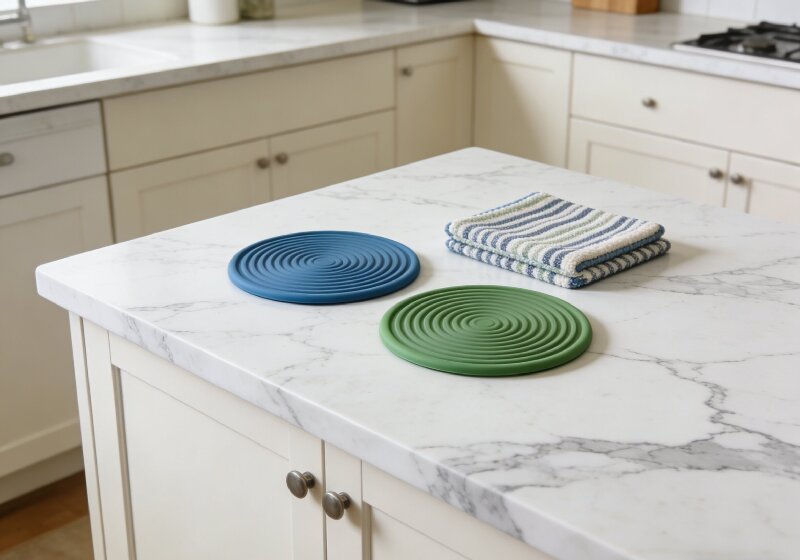
Dive deeper Paragraph: A month later, I got an email. It was from Mike. He sent photos. The kitchen looked great. The marble was shiny. But I noticed something else. There were stylish trivets3 on the counter. He learned his lesson. He wrote to me. He said, "We appreciate the stone more now." He said the little scare made them respect the material. The mark was part of their story. This is how we should view marble. It is not just a product. It is nature in your home.
I always tell my clients this. Use trivets3. Not because the stone is bad. But because you want it to last forever. Think of it like a high-quality wood table. You would not put a hot pot on fine wood. Treat stone the same way. It is strong, but it deserves care. This small habit protects your investment. It keeps the sealer2 strong. It stops the thermal shock6 risk. It is a small step. But it makes a big difference. We want your Lifeng Stone products to look perfect for years. A simple pad makes that happen. It is the best insurance for your kitchen.
LOOP END
Conclusion
Marble resists heat well, but sealer2s do not. Use trivets3 to protect the finish, understand the science, and enjoy your durable, natural stone for a lifetime.
Explore how marble's natural properties contribute to its heat resistance, ensuring your countertops stay beautiful. ↩
Understand the role of sealers in protecting marble and maintaining its beauty over time. ↩
Learn why trivets are essential for protecting your marble countertops from heat damage. ↩
Learn effective methods for removing surface marks from marble to keep it looking pristine. ↩
Explore the unique features of Carrara White marble and why it's a popular choice for countertops. ↩
Learn about thermal shock and how it affects marble, helping you prevent potential damage. ↩
Get tips on using polishing powder to restore your marble's shine after minor damage. ↩