
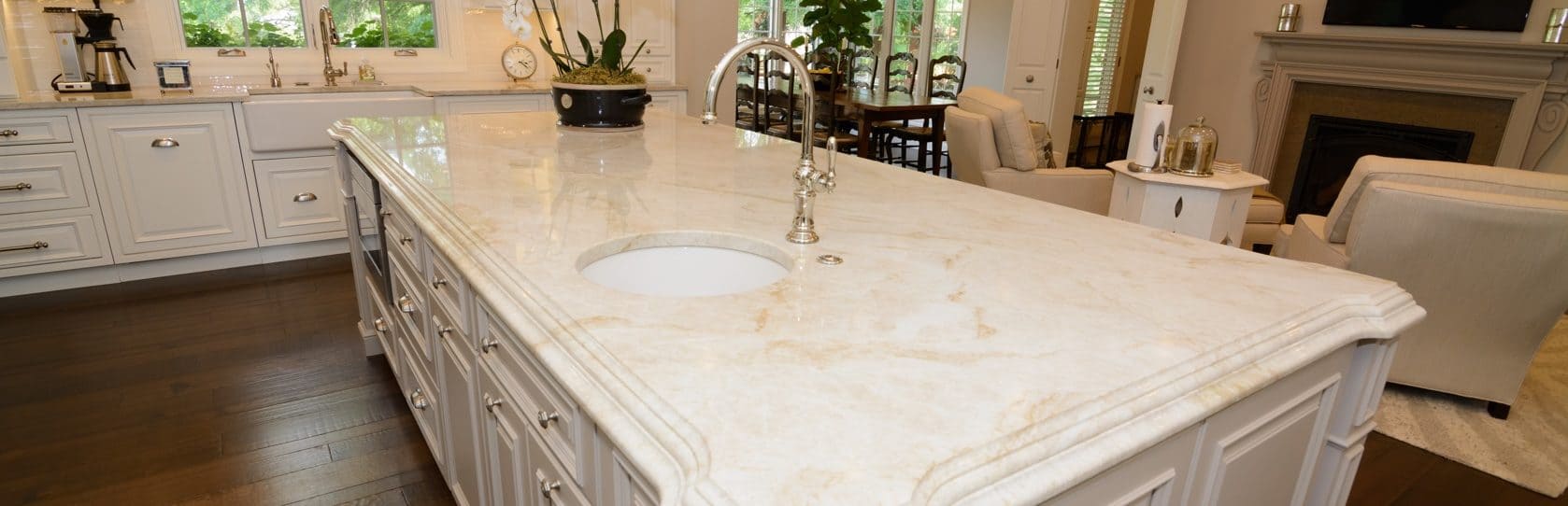
Many business owners worry that importing stone from overseas involves hidden costs. You might fear that shipping fees and potential quality issues will destroy your project budget.
To calculate the true ROI, you must look beyond the product price. You need to compare the total landed cost—including freight and duties—against local prices, while also factoring in the savings from lower installation waste1 and the value of customization.
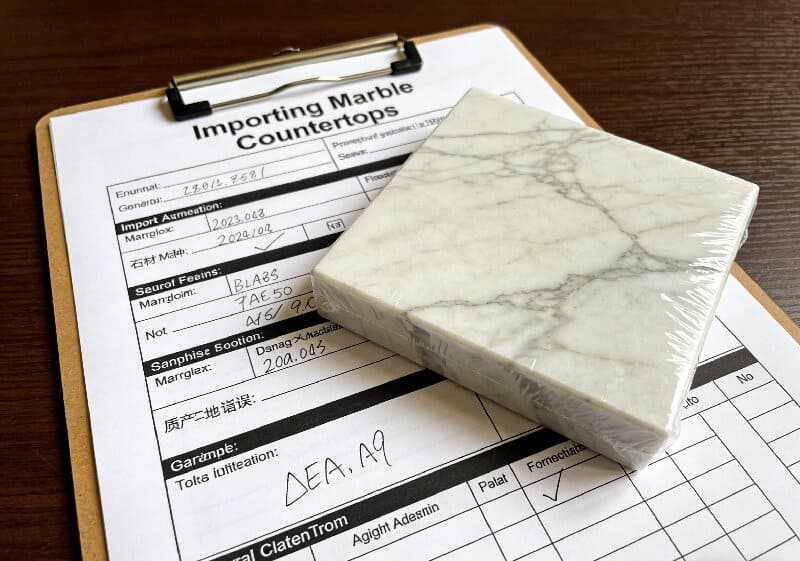
A few years ago, I received an email from an Italian client named Luca. He ran a kitchen design company and was looking for stone for a high-end apartment project. He was very worried about shipping times and hidden costs. To help him feel better, I invited him to a video call to see our factory. I showed him how we cut and polish the stone. Luca laughed and said, "Your workers are more precise than my barista in Milan." He decided to place an order. Months later, he told me his project profit was 12% higher than expected. This happened because the price was good and the installation waste1 was very low. This experience proved that ROI is about more than just numbers. It is about trust and details.
Is the Lower Price of Chinese Marble Too Good to Be True?
You might think that a low price tag means the product is low quality. This fear stops many contractors and wholesalers from increasing their profit margins.
The lower price comes from lower labor costs2 and direct access to raw materials, not poor quality. By buying directly from a factory, you remove the middleman markups, which immediately saves you 30% to 50% on the cost of materials.
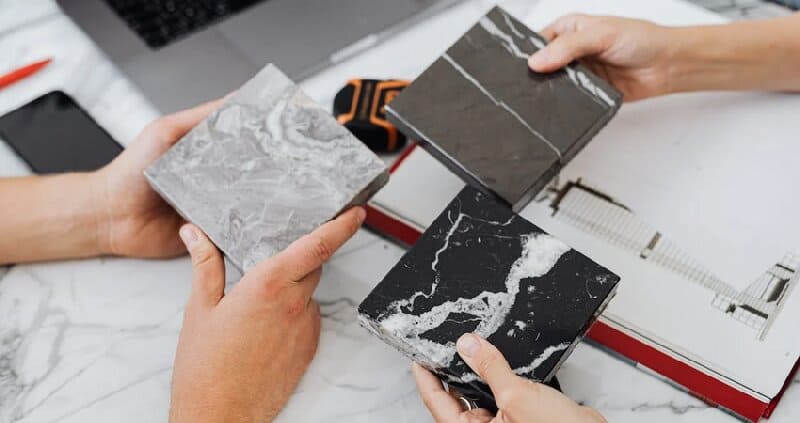
When you look at the price of marble, you must understand where the money goes. In your local market, the price includes the quarry cost, the factory cost, the exporter's fee, the shipping cost, the importer's fee, and the retailer's markup. Each step adds money to the final bill. When you buy from us in China, you skip many of these steps. You pay the factory price directly.
We are located in Shuitou Town. This is one of the biggest stone centers in the world. We have easy access to blocks and slabs. This keeps our costs low. We pass these savings to you. You should not worry about quality just because the price is lower. You can verify quality easily. We send samples. We do video inspections. We provide photos before packing.
Here is a simple breakdown of where you save money:
| Cost Factor | Local Supplier | Direct Import from China |
|---|---|---|
| Material Cost | High (includes 3-4 markups) | Low (Factory Direct) |
| Middleman Fees | High | Zero |
| Selection | Limited to stock | Unlimited |
| Total Material ROI | Standard | High (+30-50%) |
The ROI starts with the purchase price. Even with shipping added, the cost per square foot is usually much lower than buying locally. This gives you a strong head start on your project profitability.
Do Shipping Costs and Delays Destroy Your Profit Margins?
Shipping stone across the ocean feels risky and very slow to many people. You worry that a late delivery will cause expensive delays for your construction team.
While shipping takes time, planning ahead removes the risk. The cost of freight is often a small fraction of the total savings, and reliable logistics partners ensure your materials arrive safely and on schedule.
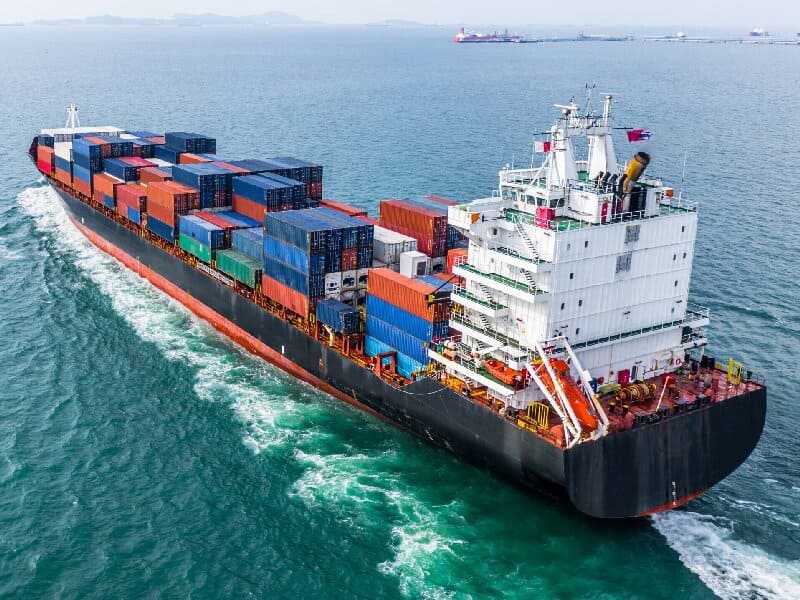
Shipping is the biggest concern for new clients. It is true that shipping takes time. It usually takes 4 to 6 weeks to reach Europe or North America. But you must look at this mathematically. If you save $20,000 on materials, and shipping costs $3,000, you are still ahead by $17,000. The ROI is still positive.
The key to managing this is planning. You cannot order stone two weeks before you need it. You must order early. We help with this. We give clear production schedules. We work with trusted shipping agents. We handle the paperwork. This makes the process smooth.
You also need to consider the "cost of convenience" when buying locally. You pay a huge premium to have the stone "right now." But for large projects, you plan months in advance anyway. Why pay for immediate availability when you do not need it yet? By aligning your construction schedule with our shipping schedule, you keep that extra profit.
Cost breakdown of logistics vs. savings:
- Freight Cost: Usually $0.50 - $1.50 per sq. ft. depending on volume.
- Local Markup Premium: Usually $10.00 - $30.00 per sq. ft.
- Result: The shipping cost is negligible compared to the markup savings.
How Does Fabrication Precision Affect Your Bottom Line?
Poorly cut stone leads to waste and difficult installation work on the job site. This increases labor hours and eats into your project's final profit.
Precision manufacturing reduces on-site adjustments and material waste3. When slabs are cut to exact specifications at the factory, your installers spend less time fixing errors, which directly boosts your net profit.
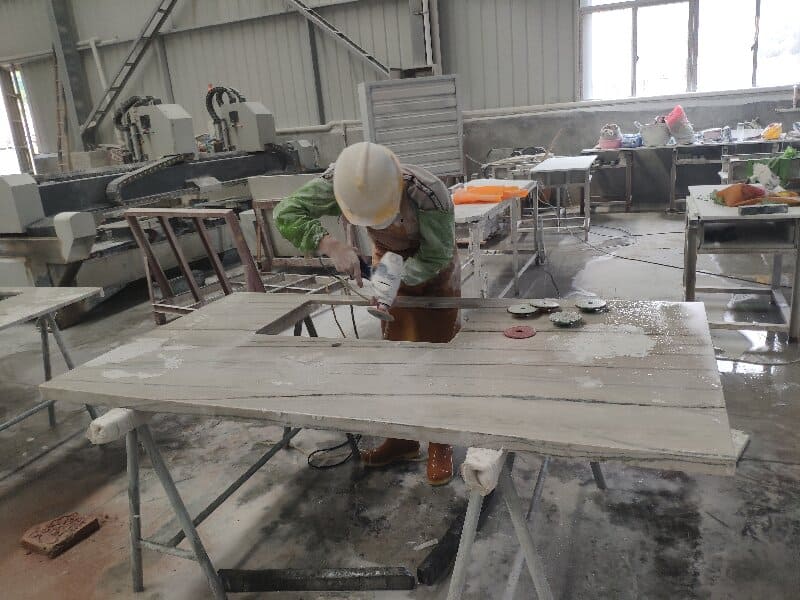
This is the point my client Luca made. He saw a 12% profit increase. This was not just because the stone was cheap. It was because the stone was perfect. When we make countertops, we use advanced machines. We cut to the exact millimeter. We label every piece. We do a "dry lay" in our factory. This means we lay out the floor or wall in our factory first. We check the pattern match. We check the edges.
When the stone arrives at your site, your workers just install it. They do not need to cut it again. They do not need to polish edges on site. This saves hours of expensive labor. In construction, time is money. If your team finishes in 3 days instead of 5 days, your ROI goes up.
Also, consider the waste factor. If you buy slabs locally and cut them yourself, you pay for the whole slab. You throw away the offcuts. When you order cut-to-size products from us, you only pay for the finished product. We handle the waste. This is a hidden saving that many people forget.
| Installation Factor | Buying Raw Slabs Locally | Importing Finished Products |
|---|---|---|
| Material Waste | You pay for 100% of the slab | You pay for the final size only |
| On-site Labor | Cutting, polishing, installing | Installing only |
| Error Risk | High (manual cutting) | Low (machine cutting) |
| Project Speed | Slow | Fast |
Can Customization Options Increase Your Project Value?
Standard sizes often limit design creativity and lower client satisfaction. You struggle to find unique pieces that fit specific architectural needs in local warehouses.
Importing allows for full customization without the high premiums charged by local fabricators. Offering unique sizes, edges, and finishes distinguishes your business from competitors, allowing you to charge higher rates.
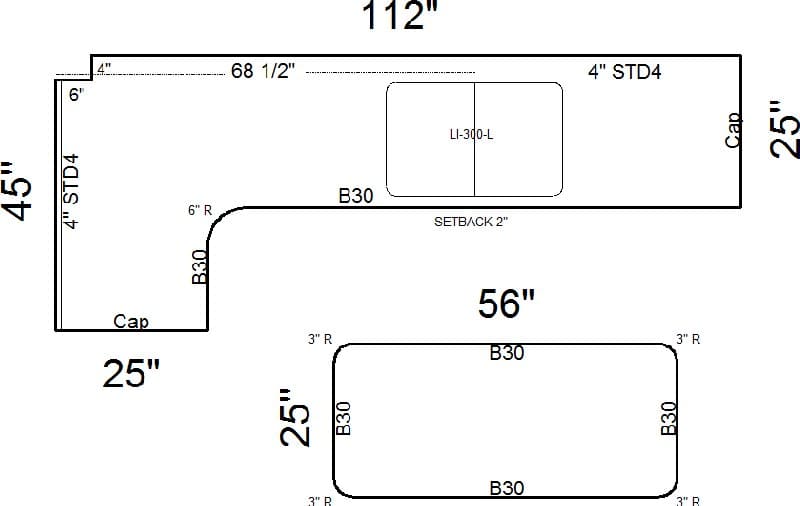
ROI is not just about saving money. It is also about making more money. When you offer something unique, you can charge more. Local suppliers usually sell standard sizes. They sell the same colors as everyone else. If you want a custom edge profile or a special thickness, they charge a lot.
We are a custom manufacturer. We can make anything you design. Do you want a 3-inch thick island top? We can do it. Do you want a complex Ogee edge4? We can do it. Do you want a specific marble vein direction? We can do it.
This flexibility helps you win more projects. Architects and designers love freedom. If you tell them, "I can get exactly what you drew," they will choose you. They will pay a premium for your service. But your cost remains low because you are buying direct. This gap between your low cost and your high value service is your profit.
Here is how customization helps different partners:
- Wholesalers: You can create your own private label brand with unique colors.
- Contractors: You can solve difficult site problems with custom cuts.
- Designers: You never have to say "no" to a client's vision.
The ability to say "yes" to custom requests builds your reputation. A good reputation leads to more referrals. This is the long-term ROI of working with a factory like Lifeng Stone.
Conclusion
To find the true ROI, combine the material savings, the lower installation costs, and the value of customization.
Learning about installation waste can lead to significant savings and improved project efficiency. ↩
Understanding labor costs can help you assess the value of imported materials versus local options. ↩
Reducing material waste is vital for cost savings and sustainability in construction projects. ↩
Understanding design options like the complex Ogee edge can help you meet client demands and enhance your offerings. ↩