You worry about broken stone during shipping. It causes delays and costs money. You need the right packing method to stop this nightmare.
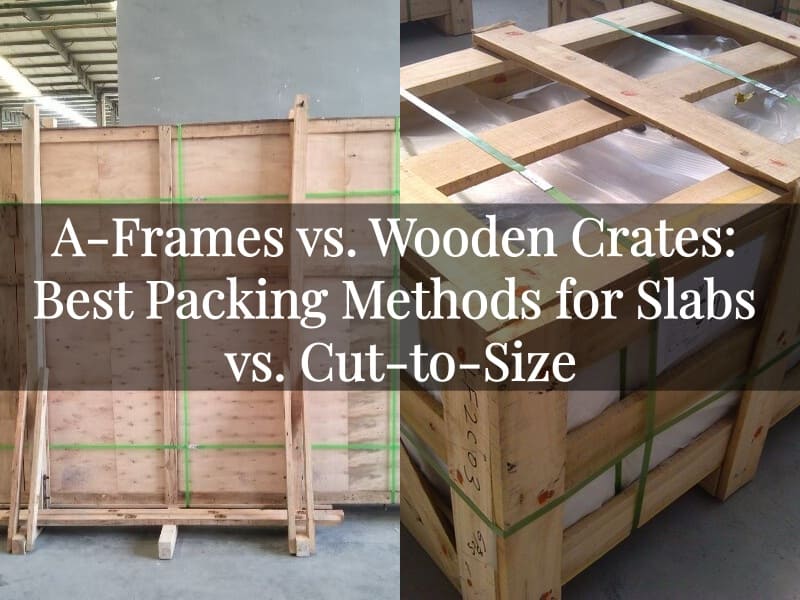
A-Frames1 are best for large slabs because they keep vertical balance and prevent breaking. Wooden crates are perfect for cut-to-size tiles and countertops because they protect edges and allow safe stacking. Choosing the right method depends on the size and shape of the stone.
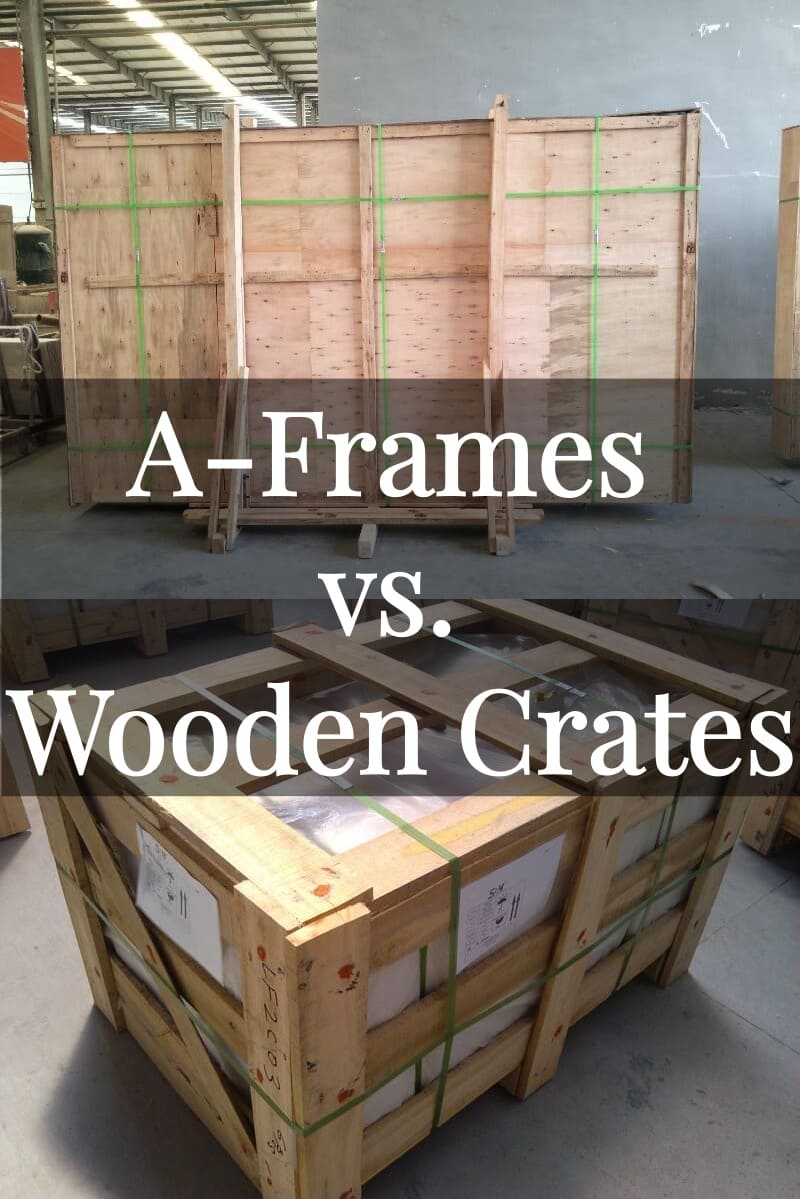
Last year, I got a call from Mark. He is a client from Australia. He was very stressed. His project needed slabs and cut-to-size countertops fast. He lost money with other suppliers before. They put big slabs in crates, and the crates tipped over. They put small pieces on A-Frames1, and the edges chipped. Mark told me, "Jack, I get a headache when I see wooden crates, and I do not trust A-Frames1 anymore." I wanted him to feel safe. I asked him to join a video call. I showed him our factory. He saw our steel A-Frames1 for slabs and strong crates for tiles. He smiled and said, "The packing was not the problem. The application was wrong." Now, Mark trusts our methods completely.
Why Are A-Frames1 the Best Choice for Large Slabs?
Large slabs are heavy and fragile. If they fall, they break easily. You need a structure that uses gravity to keep them safe.
A-Frames1 hold slabs vertically at a slight angle. This leans the weight against the frame so the stone does not tip over. Steel A-frames are standard for international shipping because they handle heavy loads better than wood and secure the slabs tightly inside the container.
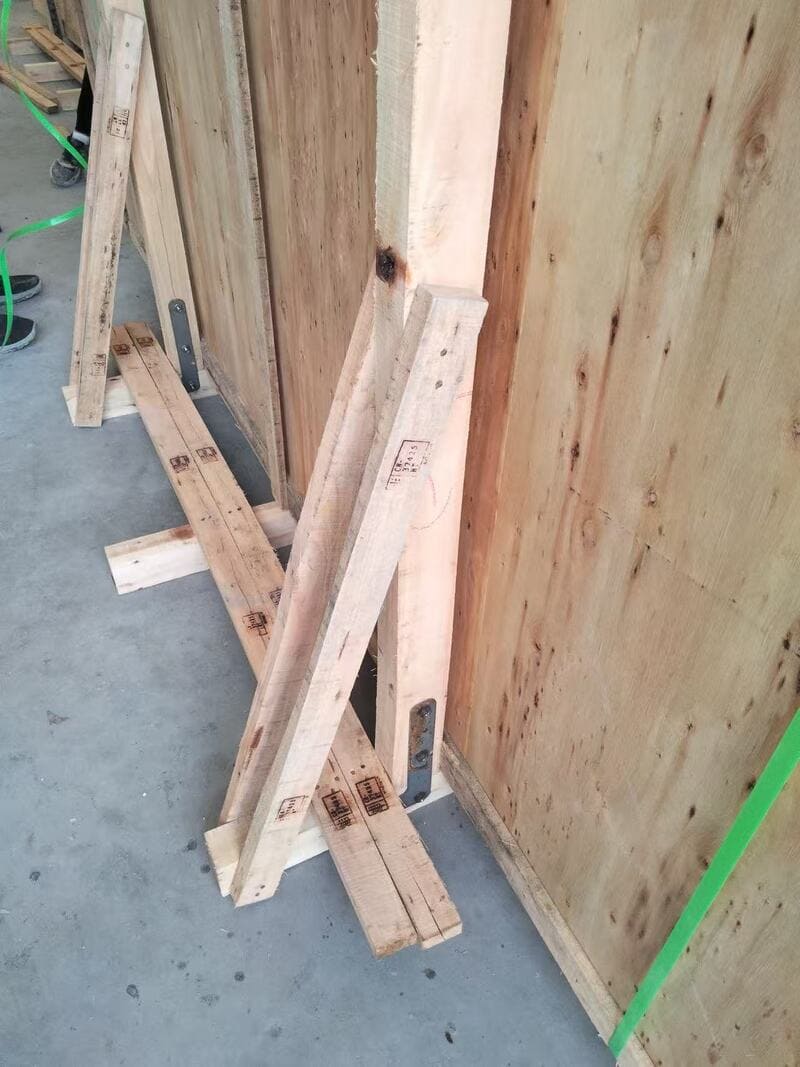
I want to explain why we use A-Frames1 for slabs. Stone slabs are huge. They are like big sheets of glass. If you lay them flat, they might crack under their own weight. If you stand them up straight without support, they will fall. An A-Frame looks like the letter "A". It has a wide base. We lean the slabs against it. This uses gravity to keep the stone safe.
The Material Matters: Steel vs. Wood
We use steel frames for most export orders. Wood is okay for short local trips. But for a ship crossing the ocean, steel is better. Steel does not bend. It does not rot. Mark saw this on the video call. He saw that we bolt the steel frames together. This makes a solid unit.
How We Secure the Slabs
We do not just lean the stone against the metal. That would scratch the surface. We put rubber pads2 between the steel and the stone. We also put plastic sheets between the polished faces of the slabs. Then, we use strong steel straps. We wrap these straps around the whole bundle. This locks the slabs to the A-Frame. The slabs become one big block. They move together. They do not hit each other.
| Feature | Steel A-Frame | Wooden A-Frame |
|---|---|---|
| Strength | Very High | Medium |
| Durability | Excellent | Good |
| Risk of Rot | None | Possible |
| Best Use | Export / Heavy Slabs | Local / Light Slabs |
| Cost | Higher | Lower |
We position the A-Frames1 in the container carefully. We make sure the weight is even. If one side is too heavy, the crane cannot lift the container safely. A-Frames1 allow us to load the maximum number of slabs while keeping them safe. This is why Mark now insists on A-Frames1 for his slab orders.
When Should You Use Wooden Crates for Stone Projects?
Small stone pieces slide around easily. This movement causes scratches and chips. You need a container that holds everything tight and protects the corners.
Wooden crates are the safest option for cut-to-size products like tiles, vanity tops, and stair treads. Strong fumigated wood3 creates a box that protects the stone from all sides. Foam and plastic inside the crate stop the pieces from hitting each other during rough sea transport.
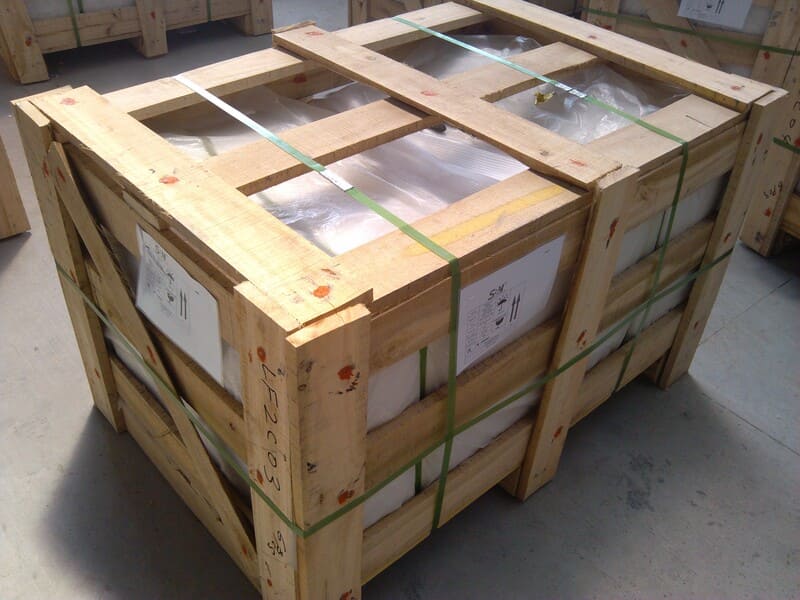
Cut-to-size means the stone is ready to install. It has finished edges. These edges are very delicate. We cannot stack these vertically on an A-Frame. They are too small. They will rattle. They will slide down. The corners will break. This is exactly what happened to Mark before he met us. His previous supplier tried to save money. They put small tops on a frame. The result was a disaster.
Inside the Crate
We build our crates with strong wood. We always fumigate the wood. This kills any bugs. It is a rule for international shipping. But the outside is not the most important part. The inside is what matters. We treat the inside of the crate like a bed for the stone.
- Base Layer: We put thick foam on the bottom.
- Separation: We put soft plastic between every piece of stone.
- Side Protection: We line the walls of the crate with foam.
Stopping the Movement
The biggest enemy is movement. If the stone moves inside the box, it breaks. We pack the crates very tightly. If there is empty space, we fill it. We use wood blocks or thick foam to fill the gaps. The stone must sit still.
| Packing Layer | Material Used | Purpose |
|---|---|---|
| Outer Shell | Fumigated Wood | Structural strength |
| Cushioning | Styrofoam / EPE Foam | Shock absorption |
| Surface Guard | Plastic Film | Prevents scratches |
| Gap Filler | Wood Strips / Hard Foam | Prevents shifting |
When Mark saw our workers packing the crates, he noticed the details. He saw them checking the corners. He saw them reinforcing the crate with metal straps on the outside. This gave him confidence. He knew his kitchen countertops would arrive in perfect condition.
What Happens If You Choose the Wrong Packing Method?
Using the wrong packing saves a little money but risks everything. Your cargo arrives broken. You face angry clients and big financial losses.
Incorrect packing leads to two main problems: instability and edge damage. Slabs in crates often have a high center of gravity and tip over. Small pieces on A-Frames1 lack side support and suffer from vibration damage4. The cost of replacing broken stone is always higher than proper packing.
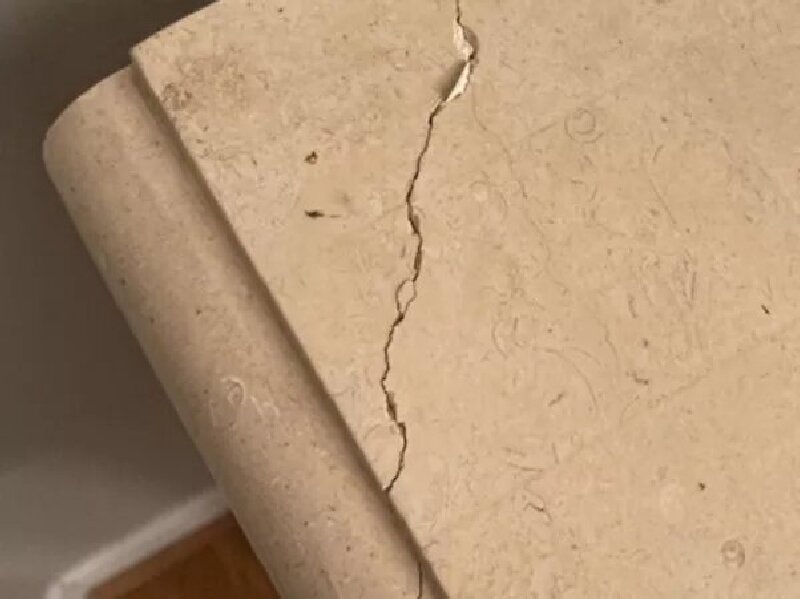
Let us look at the physics. Mark told me his slabs tipped over. This happens when you put a tall slab in a box that is not wide enough. The center of gravity is too high. The ship moves, and the box falls. This is dangerous. It destroys the stone. It can also hurt the people unloading the container.
The Financial Impact
If your stone arrives broken, you lose more than the cost of the stone. You lose time. Mark had a deadline. He could not wait for a new shipment from China. It takes weeks. If the stone is broken, his workers stand around doing nothing. He still has to pay them. The homeowner gets angry. Mark’s reputation suffers.
Safety Hazards
Safety is my top priority. A falling slab weighs hundreds of kilograms. It can kill a person. A-Frames1 prevent this because they lean the stone back. Crates are good for flat items, but not for tall, thin items. Using a crate for a large slab is a gamble. You are betting that the ocean will be calm. That is a bad bet.
Comparing the Risks
We can break down the specific risks for each product type.
| Product Type | Wrong Method | The Risk | The Consequence |
|---|---|---|---|
| Big Slabs | Wooden Crate | Tipping Over | Total loss of material, injury risk |
| Tiles | A-Frame | Sliding / Vibration | Chipped corners, cracked edges |
| Countertops | Loose Bundle | Surface Friction | Scratches on the polished face |
Mark learned this the hard way. He thought all packing was the same. He thought a box was just a box. Now he knows that the geometry of the stone dictates the packing method. He does not guess anymore. He asks us.
How Do We Secure the Cargo Inside the Container?
Good packing is useless if the boxes move inside the container. Rough seas shake the ship violently. You need professional container loading to fix everything in place.
We do not just put crates in the container; we lock them down. We use wire ropes for A-Frames1 and wood bracing for crates. This prevents shifting during transport. Proper weight distribution ensures the container is safe for cranes to lift and ships to carry.
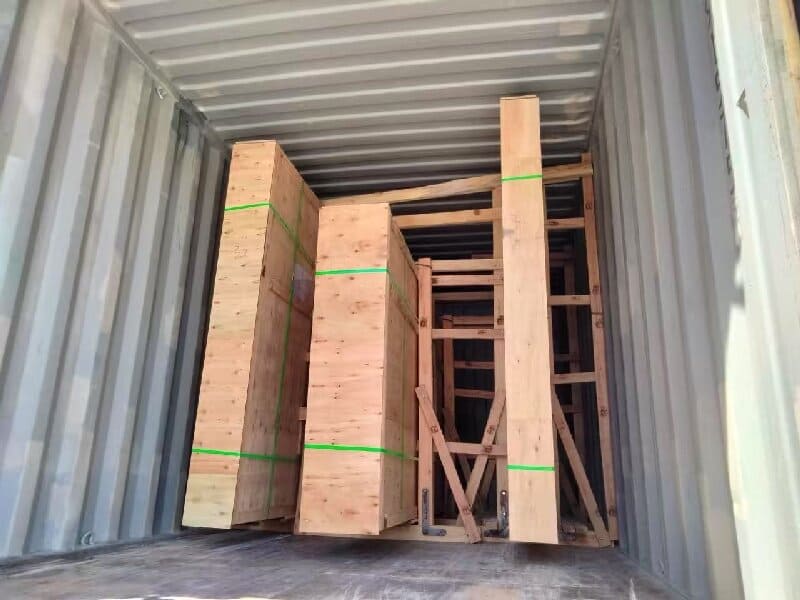
Packing the stone is step one. Loading the container is step two. I have seen good crates arrive broken because they were loose in the container. The ship rocks side to side. If a crate has space to move, it acts like a battering ram. It hits the wall. It hits other crates. It breaks apart.
The Lashing Process
We use a process called "lashing." This means tying things down.
- For A-Frames1: We use thick steel wires. We attach the wires to the hooks on the container floor and walls. We tighten them with a machine. The A-Frame becomes part of the container. It cannot move.
- For Wooden Crates: We use wood beams. We nail these beams to the floor. We build a frame around the crates. We also use air bags. We put these bags between the crates and inflate them. They fill the empty space.
Weight Distribution
We must balance the container. We cannot put all the heavy slabs on the left side and the light tiles on the right. The container will tilt. The port crane might drop it. We calculate the weight before we load. We plan where every crate goes.
| Lashing Item | Material | Function |
|---|---|---|
| Wire Rope | Braided Steel | Holds heavy A-Frames1 to container walls |
| Turnbuckle | Steel | Tightens the wire rope |
| Dunnage Bag | Heavy Duty Plastic/Paper | Fills gaps between crates |
| Wood Bracing | Timber | Blocks crates from sliding on the floor |
Mark asked about this too. He wanted to know if his mixed order of slabs and tiles would be safe. I explained our loading plan. We put the heavy A-Frames1 at the back. We lashed them with wire. We put the crates in front. We braced them with wood. Everything arrived safely. Mark was happy. He got his stone on time.
Conclusion
Packing is as important as the stone quality itself. Use A-Frames1 for slabs and wooden crates for cut-to-size to ensure your shipment arrives safely and your project stays on schedule.
Explore the benefits of A-Frames for stone packing to ensure safe transport and prevent damage. ↩
Discover how rubber pads protect stone surfaces during transport. ↩
Find out how fumigated wood protects your stone from pests during transport. ↩
Learn strategies to minimize vibration damage and protect your stone cargo. ↩